

The sun dips below the horizon, painting the Philippine Sea in shades of bruised purple and liquid gold. You’ve just finished a day of dancing with manta rays, and the only thing left to do is prep your gear for tomorrow’s sunrise drop. There is a quiet rhythm to this ritual: the gentle click of a housing, the soft hum of a battery charger, the smell of salt air mingling with the scent of dinner wafting from the galley.
But beneath this peaceful surface, a small, silver-wrapped powerhouse is waiting to either capture your memories or ruin your trip. Lithium-ion batteries are the lifeblood of our modern adventures. They power our high-lumen torches that pierce the shadows of WWII wrecks and breathe life into the cameras that capture the iridescent flash of a pygmy seahorse. Yet, they are also temperamental travelers.
As we navigate the world in 2026, air travel has become more sophisticated, but also more stringent. If you aren’t careful, your high-tech gear could lead to a very long, very awkward conversation with a gate agent: or worse, a safety hazard at 35,000 feet.
Here is how to navigate the delicate chemistry of your power sources and avoid the most common lithium battery mistakes.
1. The Saltwater Kiss: Charging or Using Damp Batteries
There is a certain poetry to the way water clings to your gear after a dive, but for a lithium battery, that moisture is a silent predator. One of the most dangerous mistakes a diver can make is allowing even a single droplet of saltwater to find its way into the battery compartment or onto the terminals.
Saltwater is highly conductive. If it enters the circuit, it can create a “bridge” where one shouldn’t exist, leading to a short circuit. When you combine a short circuit with the high energy density of lithium, the result is often heat, smoke, and eventually, fire. We often see divers rushing to change batteries between dives while still dripping wet.
Take a breath. Dry your hands thoroughly. Use a dedicated “dry towel” that never touches the deck. If your battery has been exposed to moisture, consider it compromised. Charging a wet battery is essentially inviting a thermal runaway event into your hotel room or cabin.
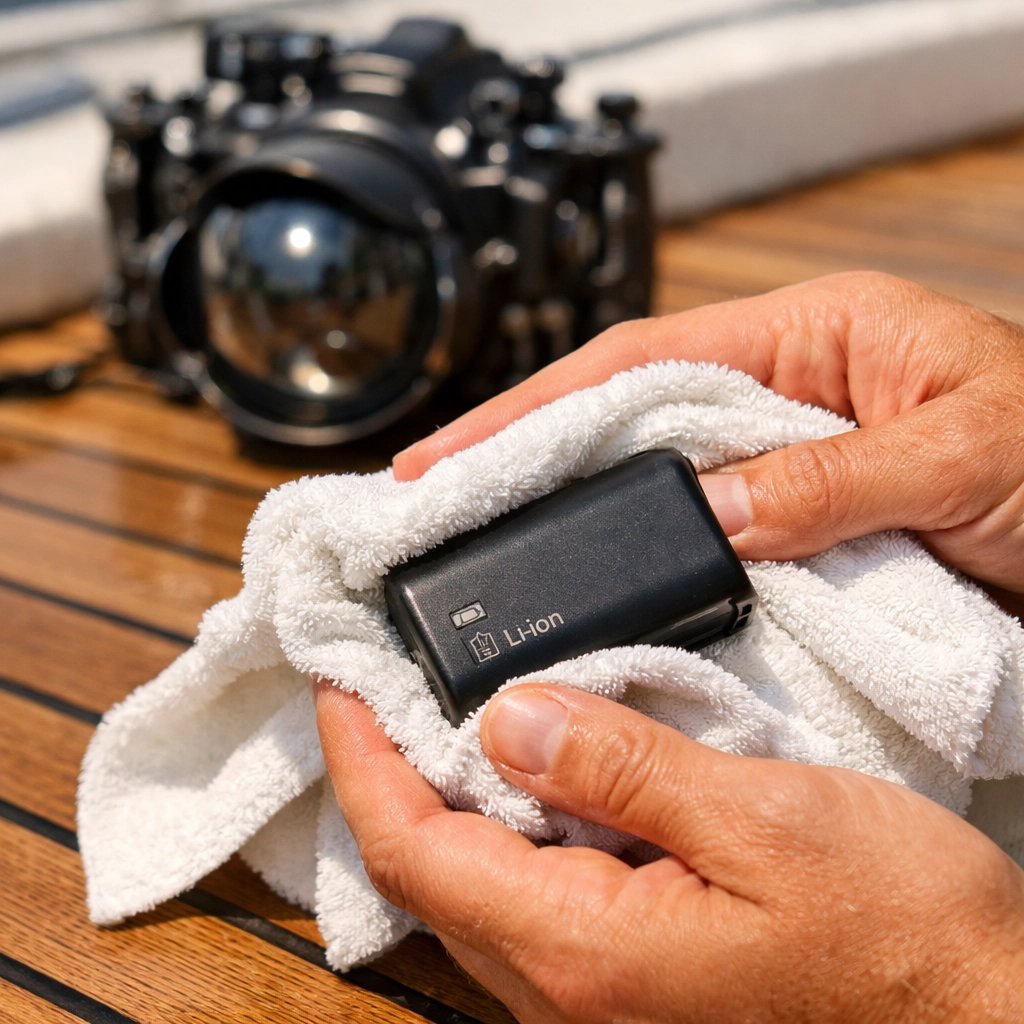
2. The Ghost in the Machine: Leaving Batteries Unattended
It’s tempting, isn’t it? You’ve had a long day of exploring the hottest underwater destinations of 2026, and you want to plug in your strobes and go to sleep. But leaving batteries to charge overnight or while you’re out at dinner is a risk you don’t need to take.
Most modern chargers have safety cut-offs, but they are not infallible. If a battery begins to fail during the charging cycle, it can overheat rapidly. On a liveaboard, where space is tight and wood or fiberglass is everywhere, a small fire can become a catastrophe in minutes.
Instead, make charging a conscious activity. Set a timer on your phone. Charge your gear while you’re reviewing your photos or enjoying a post-dive drink on the deck. Being present means you can smell the first hint of “electric” ozone or see the first wisp of smoke before it becomes a headline.
3. The Siren Call of the “Cheap” Replacement
We’ve all been there: you realize you forgot your spare battery, and the local shop only has a generic brand, or you see a “3-for-1” deal on a major online marketplace. While it’s tempting to save a few dollars, your scuba gear is a high-performance system.
Manufacturers design chargers and batteries to speak the same electrical language. Third-party batteries often lack the internal protection circuits that prevent overcharging and overheating. Using a non-manufacturer charger is like trying to fit a square peg in a round hole; it might “work,” but it’s stressing the internal chemistry of the cell.
If you’re planning a big trip, like booking your first floating dive resort, invest in the “original heartbeat” of your gear. Your peace of mind is worth more than the $20 you saved on a knock-off battery.
4. The Tropical Trap: Exposure to Heat and Sun
Lithium batteries have a favorite temperature range, and “baking on a dive boat deck” isn’t in it. High temperatures accelerate the chemical breakdown inside the battery, leading to a shorter lifespan and, in extreme cases, swelling.
A common mistake is leaving a camera or dive light in a “rinse tank” that’s sitting in the direct sun. The water in that tank can reach bathtub temperatures quickly. Similarly, leaving your gear bag in a hot car during a lunch break is a recipe for battery degradation.
Treat your batteries like you treat your skin: keep them in the shade. When you’re not using your gear, store your spares in a cool, dry place. If a battery feels uncomfortably hot to the touch, let it cool down naturally before you attempt to use or charge it.

5. Naked Terminals and the “Jumble” Bag
Imagine your gear bag as a small, vibrating universe. As you move from the airport to the boat, things shift. If you have loose batteries floating around in a pocket, their metal terminals can easily come into contact with other metal objects: think keys, coins, or even the clip of another dive light.
This accidental contact can complete a circuit, causing the battery to discharge rapidly and generate intense heat. It’s one of the most common causes of “bag fires.”
The fix is simple and elegant: use a protective cocoon. Store each battery in its own small plastic case or a “Lipo-safe” bag. If you don’t have a case, a simple piece of electrical tape over the terminals can prevent a disaster. For a full list of how to pack safely, check out the ultimate packing checklist.
6. The “Permanent Resident” Charger Mistake
Some divers treat their chargers like storage docks. They leave the battery in the charger for days, thinking it will keep it “topped off.” In reality, this constant trickle of energy can stress the battery and reduce its total cycle life.
Once the light turns green, the journey is over. Remove the battery. Let it rest. Storing batteries inside the charger also increases the risk of a fire if the charger itself suffers a surge or a malfunction.

7. Impact Damage: The Silent Internal Short
We tend to worry about the scratches on our housings, but we should be more concerned about the jolts to our batteries. A heavy drop on a concrete dock or the rough handling of a checked bag can damage the thin internal separator that keeps the battery’s components apart.
You might not see the damage on the outside, but internally, a “soft short” might be forming. This can lead to a battery that suddenly fails or, worse, begins to heat up hours after the impact.
Always secure your gear on boats. Don’t leave your lights rolling around on a table. If your gear takes a significant tumble, keep a very close eye on the battery for the next 24 hours. If it begins to swell or feels warm while idle, it’s time to retire it.
Flying in 2026: The New Rules of the Sky
Travel in 2026 has brought new nuances to baggage rules. While we all want to breeze through security, lithium batteries are a major focus for TSA and international aviation authorities.
- The Carry-on Commandment: Never, under any circumstances, put loose lithium batteries in your checked luggage. If a fire starts in the hold, it’s much harder to extinguish. Keep them in your carry-on where the crew can access them.
- Watt-Hour Limits: Most airlines allow batteries up to 100Wh without question. Between 100Wh and 160Wh, you usually need airline approval. Anything over 160Wh (like some massive professional cinema batteries) is often restricted to cargo-only on dedicated planes. Check your dive light’s specs: most are well under the limit, but it’s good to know.
- The Power Bank Factor: Remember that your “portable charger” for your phone is also a lithium battery. The same rules apply!
To ensure your journey is as smooth as a calm sea, avoid these 5 TSA mistakes that could ruin your trip.

Why Seek the Hidden?
We dive because we want to see what lies beneath the surface: the hidden caves of the Azores or the vibrant walls of Saudi Arabia. Our gear is the bridge between our world and theirs.
Taking care of your batteries isn’t just a chore; it’s an act of respect for the adventure itself. It ensures that when you finally descend into the blue, your equipment is as ready as you are. It’s about being a responsible traveler, a safe diver, and a mindful explorer.
Are you ready to pack your bags (carefully!) and head somewhere spectacular? Whether you’re chasing the northern lights or looking for destinations where non-divers can also play, we’re here to help you get there.
The ocean is calling, and its secrets are waiting to be illuminated. Let’s make sure your lights stay bright and your journey stays safe. See you in the water!

 Java Travel USA
Leave a comment