
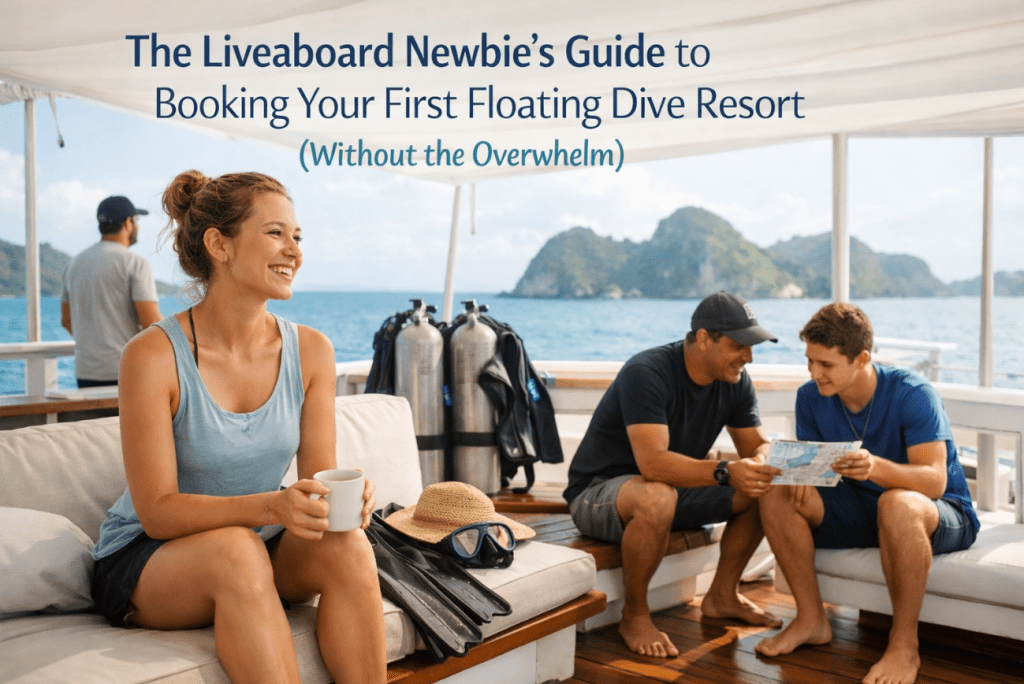
Let’s be honest: the first time someone mentions “liveaboard diving,” it sounds either incredibly adventurous or mildly terrifying. Living on a boat for a week? With strangers? In the middle of the ocean? Rolling out of bed and straight into the water before coffee?
Actually, yes to all of that. And it’s glorious.
A liveaboard is exactly what it sounds like, a floating dive resort where you live aboard a boat for anywhere from three to ten nights, waking each morning to pristine dive sites that land-based divers can only dream about. No daily commutes to the marina. No rushing to catch the dive boat. Just you, the ocean, and some of the most remote, untouched reefs on the planet waiting right off the back deck.
If you’re curious but feeling a little overwhelmed by the logistics, you’re in the right place. Let’s walk through everything you need to know to book your first liveaboard without losing your mind, or your lunch.
What Makes Liveaboards So Special?
Picture this: you finish an incredible dive exploring a reef teeming with life, climb back aboard, rinse off, grab a fresh towel, and by the time you’ve changed into dry clothes, lunch is being served. An hour later, you’re gearing up for dive number two, no boat ride required, because you’re already there.
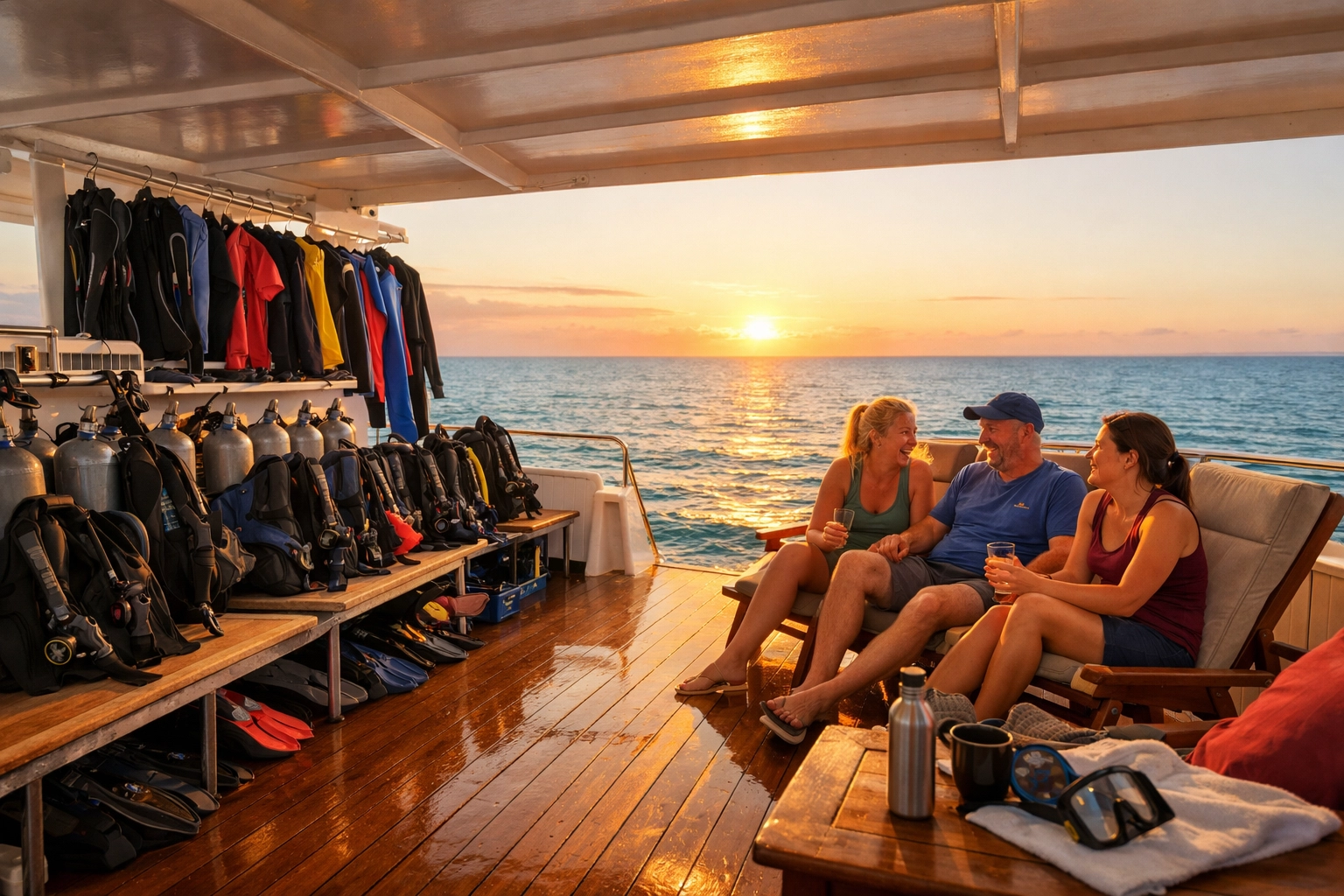
Liveaboards give you access to dive sites that are simply too far from shore for day boats to reach. That means fewer crowds, healthier reefs, and bigger marine life. You’ll log more dives in a week than most people do in six months of weekend trips. Plus, there’s something magical about falling asleep to the gentle rocking of waves and waking up somewhere completely new each morning.
Check Your Dive Card (Yes, You Need Prerequisites)
Before you start browsing Instagram-worthy liveaboard photos, make sure you meet the requirements. Most liveaboards welcome Open Water certified divers, but some destinations and routes require an Advanced Open Water certification, especially if you’ll be tackling drift dives, deeper walls, or strong currents.
Check the fine print on your chosen itinerary. Some operators ask for a minimum number of logged dives, usually between 20 and 50, not to be snobby, but because remote diving comes with variables you won’t encounter in a calm bay during your certification course. If you’re a newly minted diver, don’t panic. Just choose your first liveaboard wisely.
Start Easy: Choosing Your First Destination
The worst thing you can do is jump into an advanced destination for your maiden voyage. Save the Galápagos hammerhead marathons and Indonesia’s ripping currents for after you’ve gotten your sea legs, literally.
For first-timers, the Caribbean is your friend. Flights are easy, water conditions are generally mellow, and you’ll spend more time enjoying the experience than white-knuckling through challenging dives. The diving may be less adrenaline-pumping than some bucket-list spots, but you’ll log plenty of bottom time while adjusting to life at sea. Plus, you’ll actually enjoy yourself instead of spending the week stressed and exhausted.
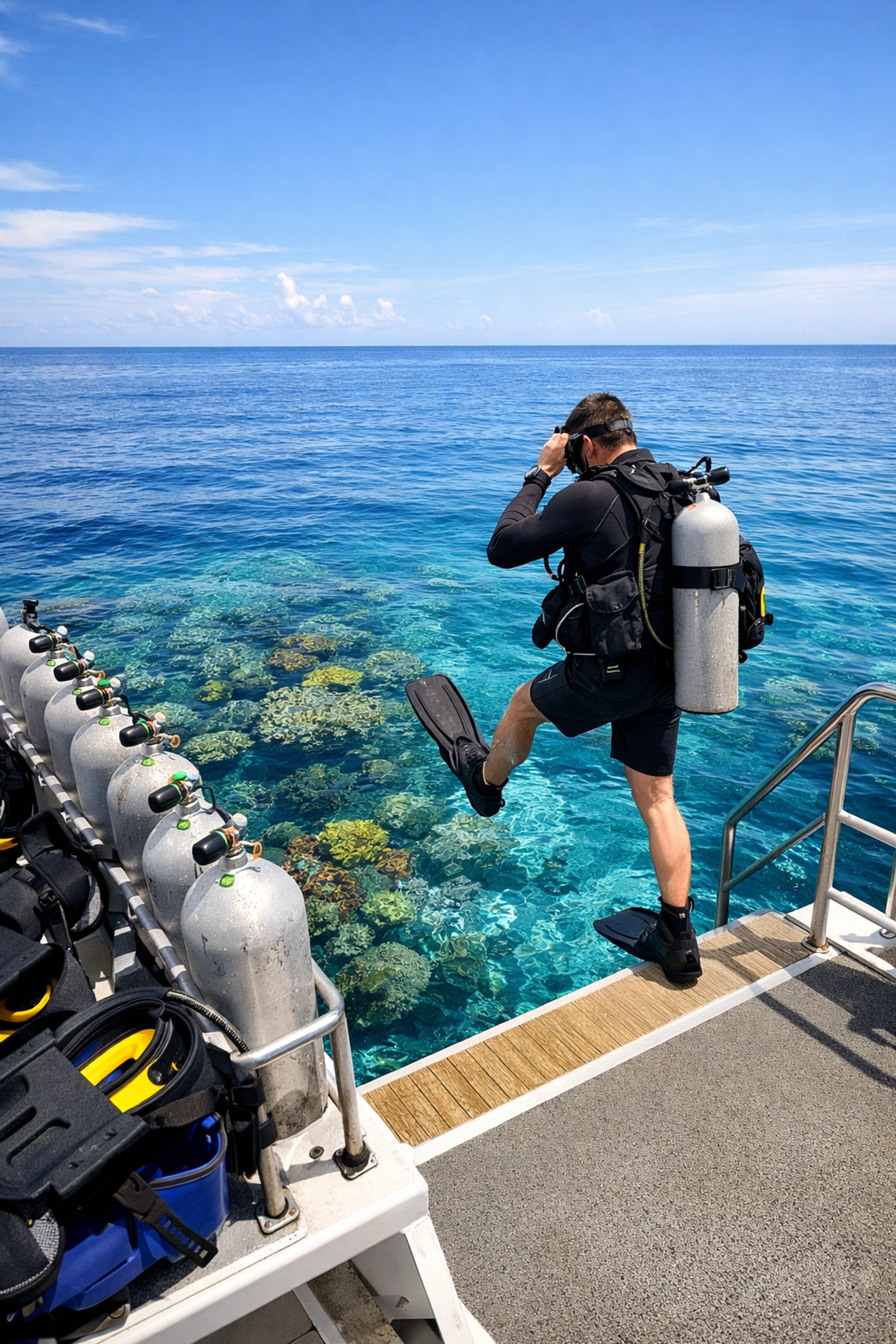
Other beginner-friendly options include the Red Sea (Egypt side), where clear waters and abundant marine life create the perfect liveaboard introduction. Save Palau, Cocos Island, and the deep blue runs for liveaboard trip number two or three.
Life Onboard: What to Actually Expect
Let’s talk about the daily rhythm, because it’s different from any other vacation you’ve taken.
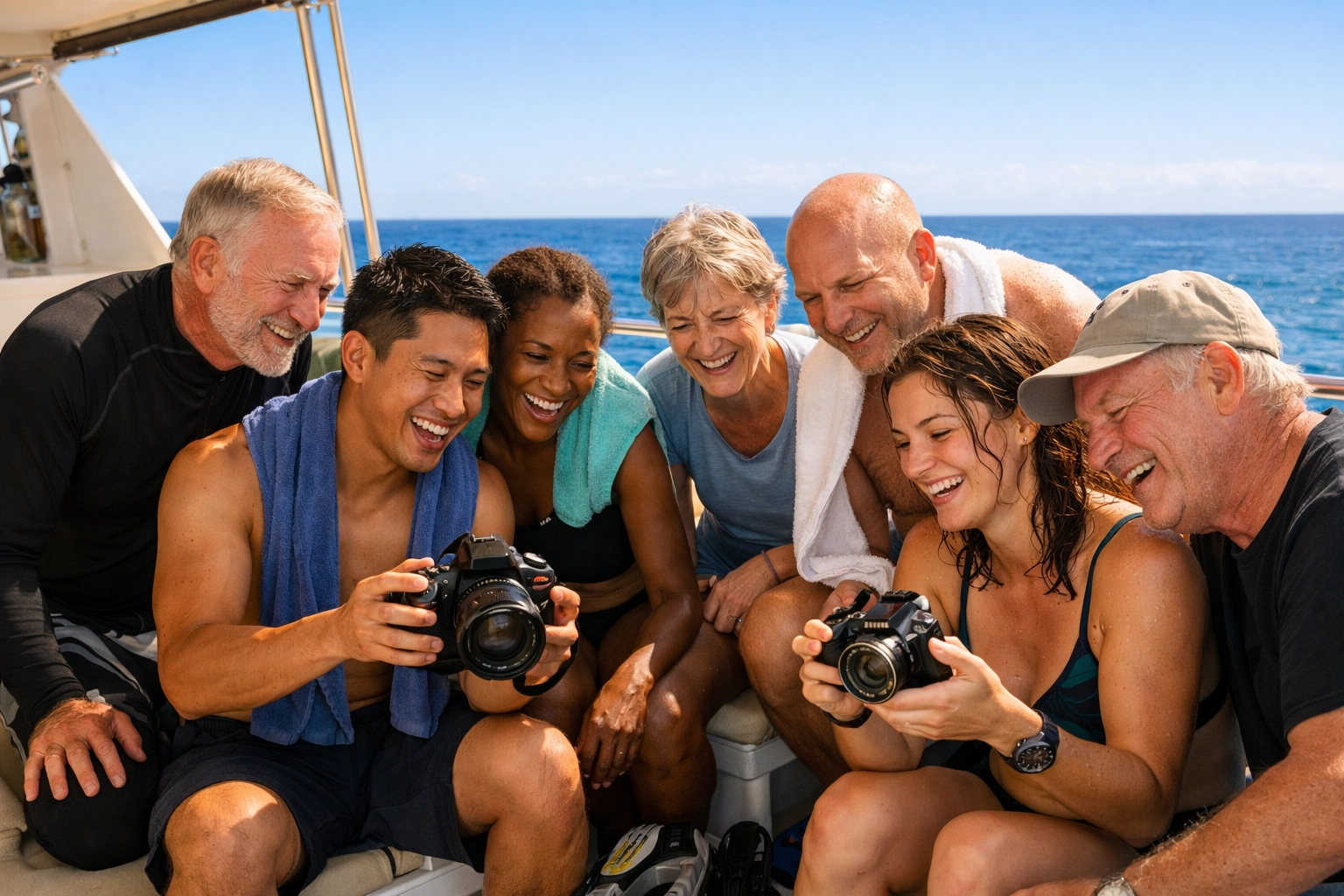
You’ll wake early, we’re talking sunrise or before, for a dive briefing from your guides. Expect to do somewhere between two and four dives per day, with generous surface intervals for eating, napping, or hanging out on the sun deck comparing photos with your new dive buddies.
Your very first dive will be a check-out dive near the departure point. This isn’t a test, it’s a chance to make sure your gear fits properly, your weights are dialed in, and you’re comfortable with your buddy team before you head to the more remote sites. If something feels off with your wetsuit thickness, weight distribution, or rental gear, speak up. Seriously. This is the time to fix it, not three days into the trip when you’re already frustrated.
Between dives, you’ll eat. A lot. Liveaboard meals are famously generous, and you’ll burn through calories faster than you’d expect from all that diving. Most boats serve three full meals plus snacks, and there’s usually coffee, tea, and drinking water available around the clock.
Packing Like a Pro (Without Overpacking Like an Amateur)
Here’s the thing about liveaboard cabins: they’re cozy. Translation? Tiny. There’s limited storage, so resist the urge to pack like you’re moving abroad.
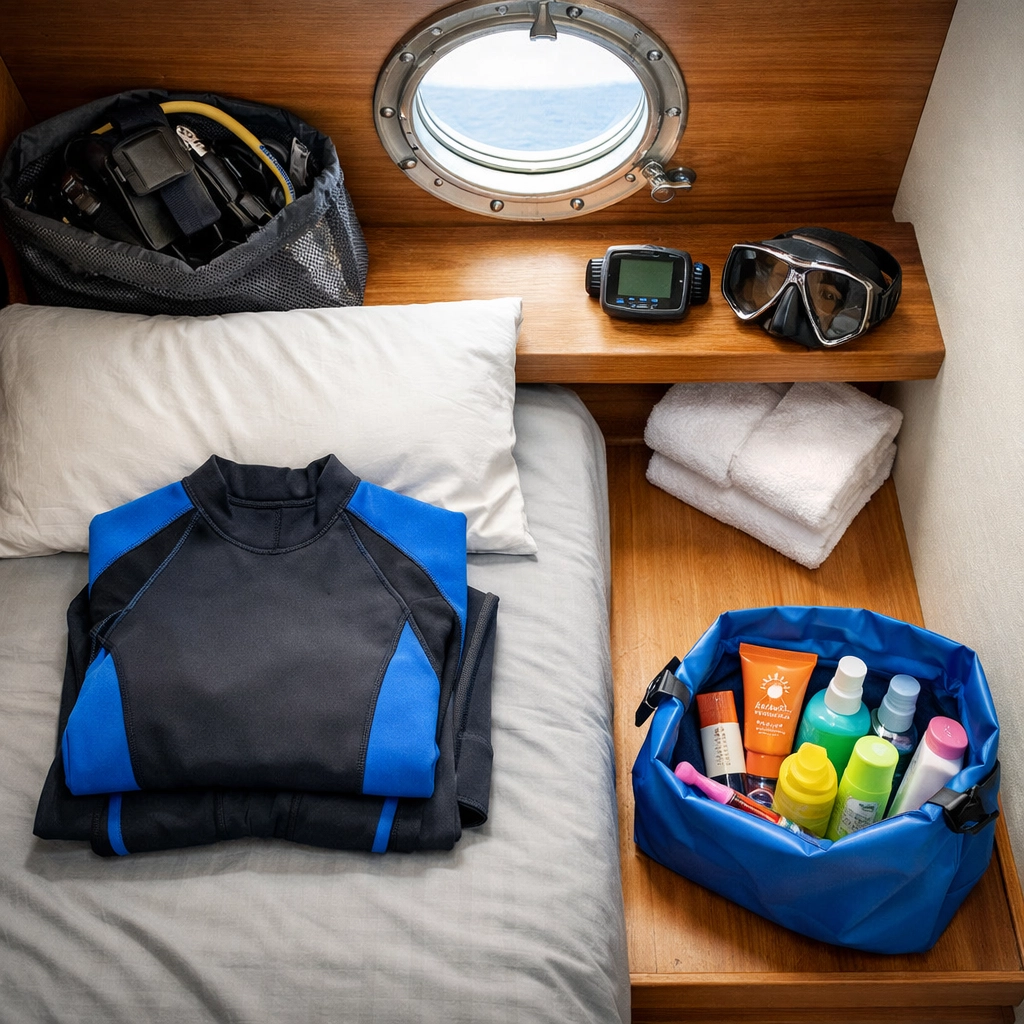
Carry your most critical items in your carry-on: regulator, dive computer, mask, and a swimsuit. If your checked bag takes a detour to Fiji when you’re headed to Belize, at least you can rent everything else and still dive.
The Must-Pack List:
- Certification cards, logbook, and any signed waivers
- A well-fitting wetsuit (3mm for tropical summer, 5mm for winter or deeper dives)
- Spare mask and fin straps, because Murphy’s Law applies at sea
- Multiple swimsuits (you’ll be wet constantly, and nothing dries overnight)
- Warm, dry layers for after dives and chilly evenings
- Reef-safe sunscreen and biodegradable toiletries
- Seasickness medication (more on this in a second)
- Your sense of adventure and flexibility
Skip the fancy shoes, you won’t wear them. Most liveaboards are barefoot zones, and if there’s a land excursion, they’ll let you know in advance.
If you’re serious about diving long-term, invest in your own mask, fins, dive computer, and DSMB (that’s a surface marker buoy for the uninitiated). Many liveaboards require divers to have their own computer and SMB, and rental prices for these items can get steep. Plus, using familiar gear makes every dive more comfortable and safe.
Let’s Talk About the Fears
Seasickness: Even if you’ve never been seasick in your life, bring medication. The ocean doesn’t care about your perfect track record. Take it before you board, not after you start feeling queasy. Ginger candies, wrist bands, and staying hydrated also help. And here’s a secret: most people feel better once they’re underwater.
Small Spaces: Yes, cabins are compact. But you’ll spend most of your waking hours on deck, in the water, or in common areas socializing. Your cabin is basically just for sleeping. If you’re truly claustrophobic, book an upper-deck cabin with a window: they cost a bit more but offer natural light and better ventilation.
Being Stuck with Strangers: Here’s the beautiful truth about liveaboards: everyone onboard shares your obsession with being underwater. Conversations flow easily when you’re all geeking out over the same hammerhead shark sighting or comparing dive computer data. Some of my best friends today are people I met on liveaboards years ago.
Buddy Up Smart
Speaking of people, let’s talk buddies. A great dive buddy makes the trip; a careless one can ruin it. If you’re traveling solo, you’ll likely be paired with someone. Before your first dive together, have an honest conversation about experience levels, comfort zones, and what you each hope to see and do.
Conduct a thorough buddy check before every dive: every single one. Agree on hand signals and emergency procedures, because not everyone rigs their alternate air source the same way. And if your buddy isn’t a good match after the first day, quietly speak with the dive staff. They’d rather reassign buddies than have someone uncomfortable or unsafe.
You Don’t Have to Do Every Dive
Here’s permission you didn’t know you needed: you can skip dives. Feel tired? Skip one. Not interested in the night dive? That’s fine. Feeling a little off? Sit it out. Liveaboards offer a buffet of diving opportunities, but you’re not obligated to stuff yourself until you’re miserable.
The best divers know their limits and dive within them. Nobody will judge you for taking a surface interval to read a book in the sun instead of logging dive number four of the day.
The Knowledge You’ll Gain
Beyond the diving itself, you’ll learn more on your first liveaboard than you ever expected. Experienced divers love sharing stories and tips. Guides offer insights into marine behavior and underwater photography. You’ll pick up tricks for better buoyancy, air consumption, and spotting camouflaged critters.
Take it all in. Ask questions. Watch how the pros manage their gear and approach their dives. You’ll return home not just with incredible dive logs, but with knowledge that will level up your diving for years to come.
Ready to Take the Plunge?
Booking your first liveaboard feels like a big step, and honestly, it is. But it’s also one of the most rewarding decisions you’ll make as a diver. There’s nothing quite like that first morning when you wake up, look out over endless blue water, and realize you’re about to explore a reef that 99% of the world will never see.
Start with an easy destination, pack smart, stay flexible, and remember that everyone onboard was once a first-timer too. The overwhelm fades quickly, usually somewhere around dive number three, when you finally stop worrying about logistics and start soaking in the magic of living on the ocean.
Need help choosing your first liveaboard or want recommendations for beginner-friendly boats? The team at Java Travel USA specializes in matching divers with the perfect floating resort for their experience level and interests. Sometimes the hardest part is just picking which incredible destination to start with: and we can help with that.
Your underwater adventure is waiting. Time to go live it.

 Java Travel USA
Leave a comment