
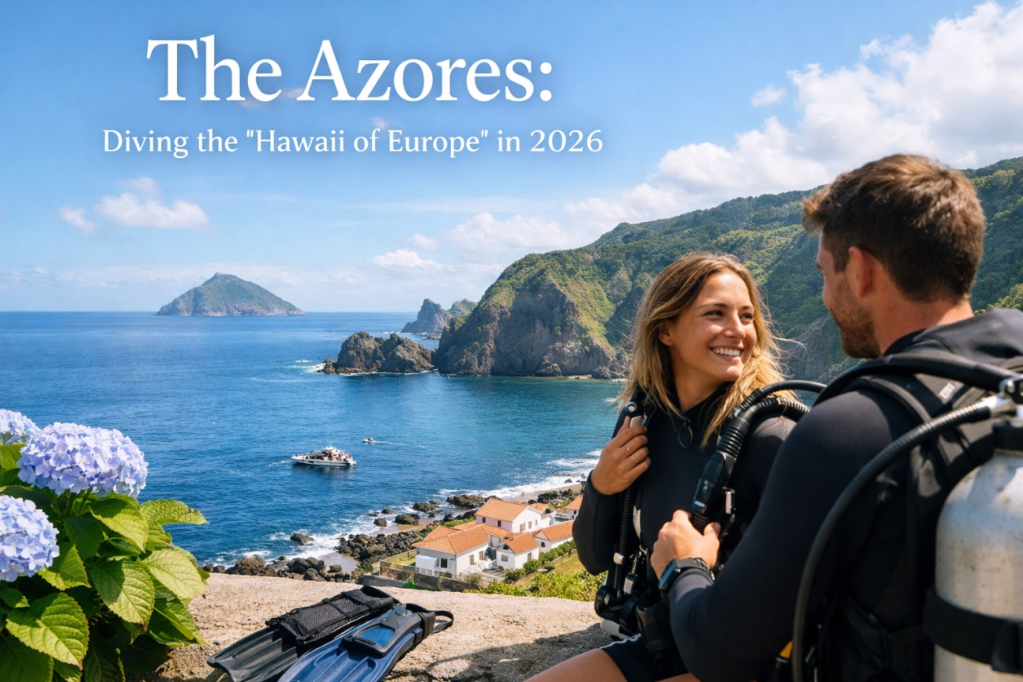
Imagine a place where volcanic peaks rise from the Atlantic like ancient sentinels, where blue sharks circle in crystalline waters, and where the horizon seems to stretch infinitely between sky and sea. Now imagine that place is only a few hours from the U.S. East Coast, nestled in the middle of the ocean, waiting to be discovered. Welcome to the Azores: Europe’s best-kept secret and 2026’s breakout destination for travelers who crave authenticity, adventure, and a little bit of magic.
They call it the “Hawaii of Europe,” and once you arrive, you’ll understand why. Nine volcanic islands scattered across the North Atlantic, each with its own personality, its own coastline carved by ancient lava flows, its own story whispered through misty calderas and cobalt-blue lagoons. But unlike Hawaii’s crowds and commercialization, the Azores remain refreshingly untouched: a place where rugged nature meets understated luxury, where eco-consciousness isn’t a trend but a way of life.
Why the Azores? Why Now?
The world is waking up to what locals have known for centuries: the Azores are extraordinary. In 2026, as travelers seek out destinations that balance adventure with sustainability, the archipelago has become the poster child for “expedition travel done right.” This isn’t about ticking off landmarks or chasing Instagram moments. It’s about immersing yourself in landscapes that feel primordial, waters that teem with life, and communities that welcome you like family.
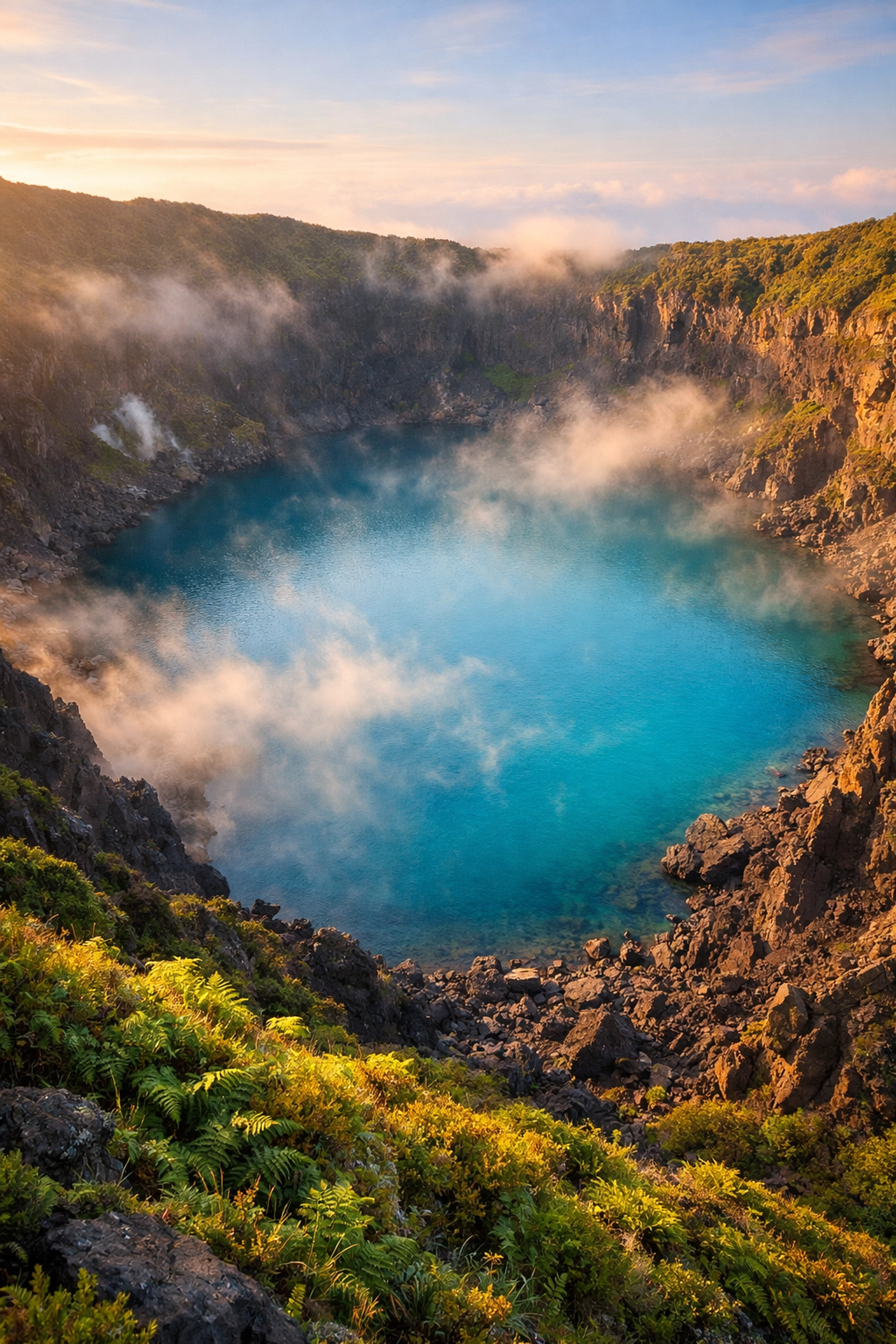
The islands sit at the crossroads of temperate and subtropical ecosystems, creating a marine environment found nowhere else in Europe. Warm Gulf Stream currents bring nutrient-rich waters, attracting some of the ocean’s most magnificent creatures. Above the surface, hydrangea-lined roads wind past tea plantations, volcanic craters hold emerald lakes, and geothermal hot springs steam invitingly after a day of exploration.
For the diver, the adventurer, the wanderer who wants more than a beach resort: this is your place.
Volcanic Drama Above and Below
The Azores were born from fire. Each island tells a geological story millions of years in the making, where volcanic activity shaped everything from jagged coastal cliffs to underwater mountains rising from the abyssal depths. On land, you’ll hike through lush forests clinging to crater rims, soak in natural thermal pools heated by the earth’s core, and stand at viewpoints where the ocean meets the sky in an endless dance of blue.
São Miguel, the largest island, showcases this volcanic personality beautifully. Sete Cidades: a twin lake nestled in an ancient caldera: shimmers in shades of green and blue that shift with the light. Steam rises from fumaroles in Furnas Valley, where locals cook traditional “cozido” stew underground, harnessing the earth’s natural heat. The smell of sulfur mingles with ocean salt, a reminder that you’re standing on the edge of something powerful and alive.
This same volcanic energy extends beneath the waves. Black lava formations create dramatic underwater topography: caves, tunnels, walls that drop into the blue void. At sites like Ambrosio Reef off Santa Maria, you’ll drift past volcanic pinnacles adorned with black coral, each formation a testament to the islands’ fiery origins. The contrast between dark basalt and electric-blue water creates a surreal underwater landscape that feels otherworldly.
Big Blue Encounters: Sharks, Rays, and Open Ocean Magic
Let’s talk about what really gets a diver’s heart racing: the pelagics. The Azores have earned a reputation as one of Europe’s premier destinations for encountering large marine life in their natural habitat. This isn’t aquarium diving. This is wild, humbling, utterly unforgettable blue water.
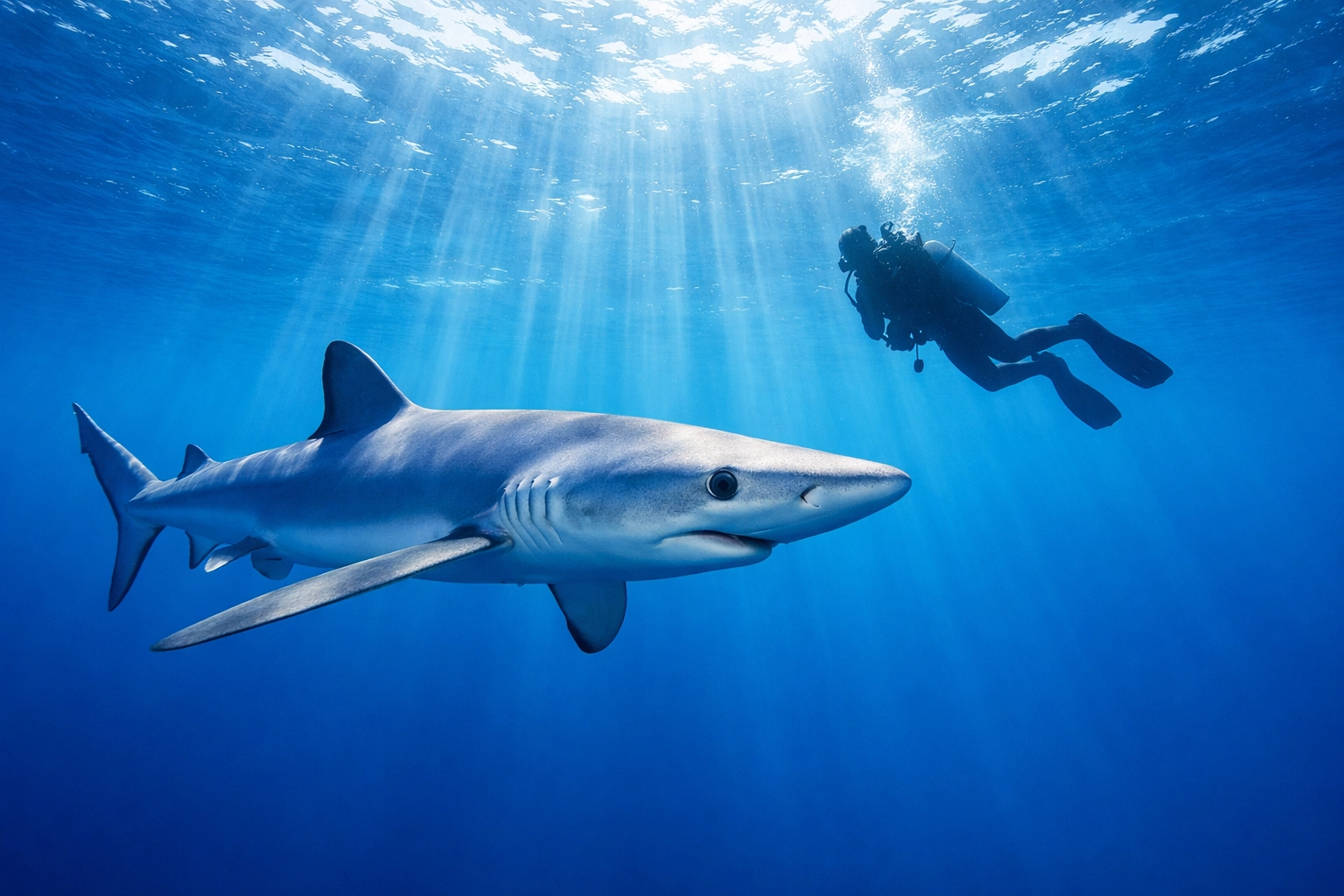
Princess Alice Bank sits 45 miles southwest of Faial, an underwater seamount that rises from 200 meters to within 35 meters of the surface. Here, in summer months, massive schools of mobula rays perform aerial ballets: hundreds of them gliding through the blue like living kites. Blue sharks, curious and graceful, investigate divers with an intelligence that’s almost unnerving. If you’re lucky and conditions align, makos make appearances, their muscular bodies slicing through the current with prehistoric power.
The dive requires advanced certification and respect for ocean conditions, but the reward? Moments that redefine your relationship with the sea. There’s something humbling about floating in the blue void, suspended between surface and depths, surrounded by creatures who’ve roamed these waters for millennia.
Formigas Islets and Dollabarat Seamount, positioned 41 miles off São Miguel’s coast, offer similar magic. At depths of 30 to 50 meters, you might encounter manta rays filtering plankton with their massive wingspans, large groupers lurking in shadows, and schools of pelagic fish that move as one silver organism. Visibility often exceeds 25 meters: the kind of clarity that makes you feel like you’re flying rather than diving.
Even closer to shore, sites like the Dori Wreck: a WWII Liberty ship resting at 20 meters: combine history with marine life. Groupers and moray eels have made the ship’s remains their home, while barracuda patrol the perimeter. The juxtaposition of human history and nature’s resilience creates a dive with layers of meaning.
Whale Watching: Giants in Their Kingdom
If you’re traveling with non-divers or simply want to experience the ocean from the surface, the Azores deliver some of the planet’s best whale watching. Twenty-four species of cetaceans have been recorded in these waters, making the archipelago a year-round destination for marine mammal encounters.
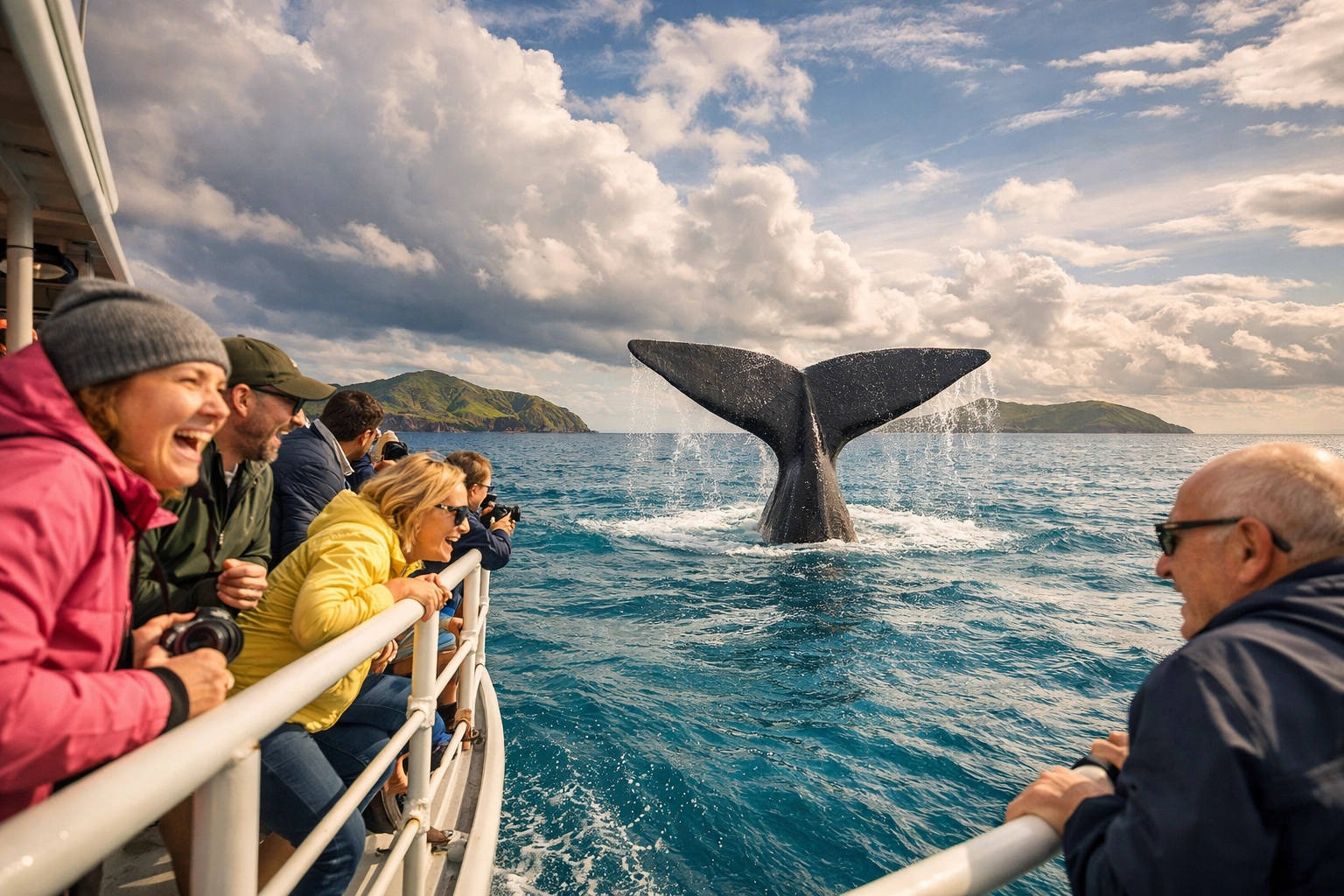
Sperm whales are the resident celebrities, visible throughout the year as they dive for squid in the deep channels between islands. Watching a 50-foot whale lift its tail flukes and descend into the abyss never gets old. In spring and early summer, blue whales: the largest animals ever to exist: migrate through, their sheer size impossible to comprehend until you’re boat-side.
Dolphins are everywhere, from playful common dolphins to acrobatic Atlantic spotted dolphins. They bow-ride, leap, and generally act like they’re having the time of their lives, which is exactly the energy you want when you’re out on the water.
Responsible tour operators use traditional whale spotters called “vigias”: lookouts stationed on clifftops who communicate whale positions to boats below. This centuries-old practice minimizes search time, reducing engine noise and disturbance to the animals. It’s eco-tourism at its finest: respectful, sustainable, and deeply connected to local culture.
The Rugged-Luxury Sweet Spot
Here’s where the Azores truly shine for 2026 travelers: they’ve mastered the art of rugged adventure wrapped in understated luxury. This isn’t about five-star resort chains or over-the-top opulence. It’s about boutique hotels in converted manor houses, farm-to-table restaurants serving fresh-caught fish and island-grown pineapple, and experiences that feel personal rather than packaged.
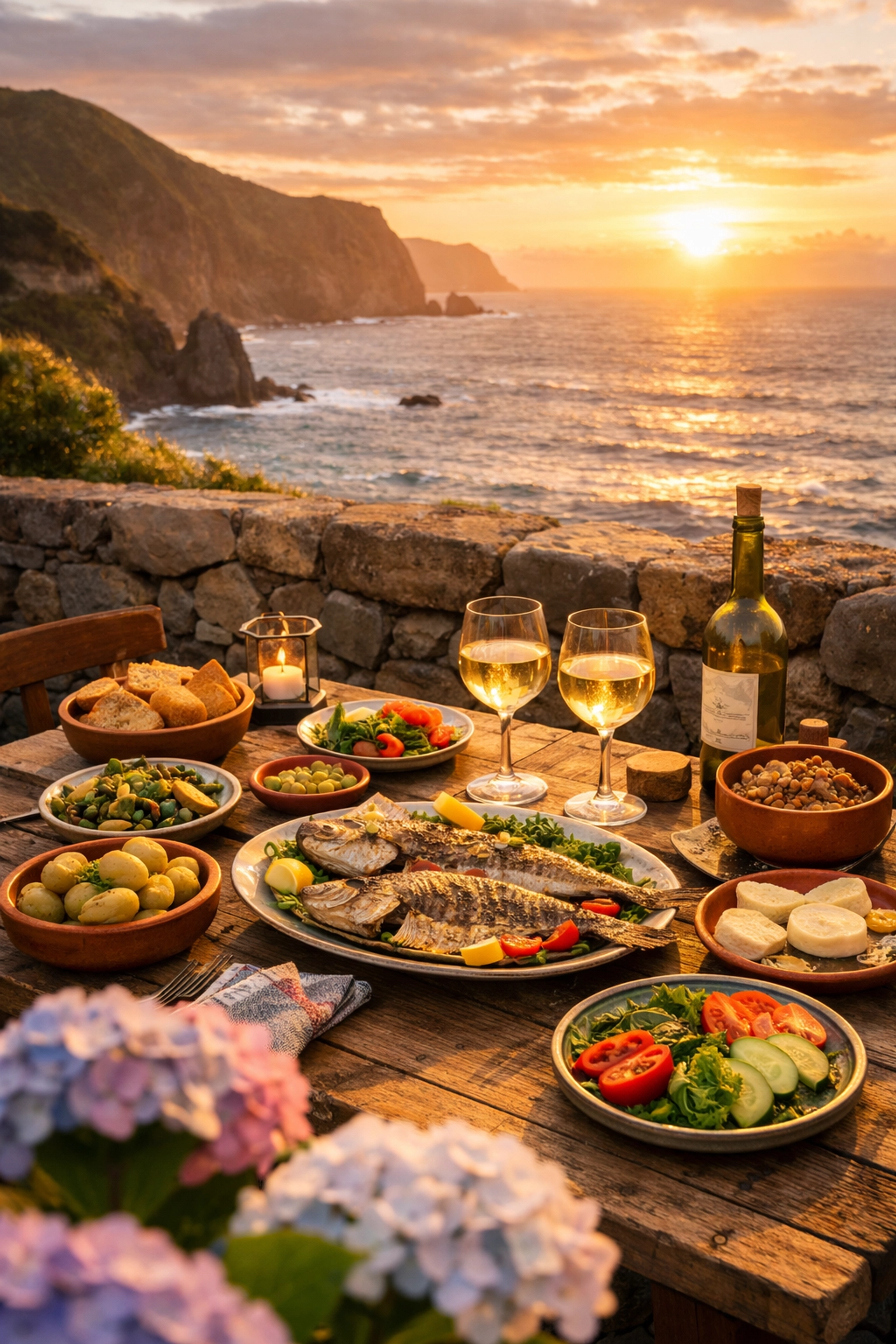
After a morning dive with blue sharks, you might find yourself at a family-owned restaurant, sipping Azorean wine while grilled limpets sizzle on the plate. Later, you’ll soak in natural thermal pools as the sun sets over the Atlantic. Your accommodation might be a restored stone cottage with vineyard views or a design-forward hotel perched on volcanic cliffs. The luxury is in the details, the authenticity, the sense that you’ve discovered something special before the crowds arrive.
This is where Java Travel USA comes in. We specialize in curating itineraries that balance adventure with comfort, ensuring you experience the Azores’ wild side without sacrificing the good stuff. Want to dive Princess Alice Bank in the morning and enjoy a private wine tasting in a volcanic cave by afternoon? We’ll make it happen. Prefer to mix whale watching, canyoning, and spa treatments? Consider it done.
Our local connections mean access to the best dive operators, the most knowledgeable marine biologists as guides, and accommodations that match your style: whether that’s cozy and traditional or sleek and modern. We handle logistics so you can focus on the experience: watching mobula rays spiral through blue water, hiking crater rims at golden hour, tasting cheese made from cows that graze on volcanic slopes.
Timing Your Azorean Adventure
Peak diving season runs from June through October, when water temperatures climb to 20-24°C (68-75°F) and sea conditions are calmest. This window also coincides with maximum pelagic activity: your best shot at mobula ray encounters and multiple shark species. Visibility often exceeds 25 meters, creating those crystal-clear moments that become lifelong memories.
That said, the Azores offer year-round diving for those comfortable with cooler water (16-18°C in winter) and variable conditions. Spring brings whale migrations, while autumn delivers excellent visibility and fewer crowds. Each season offers something different, and the islands never truly sleep.
For non-divers or mixed groups, late spring through early fall provides the most comfortable weather for hiking, whale watching, and exploring the islands’ cultural attractions. The hydrangeas bloom in July and August, painting roadsides in explosive purples and blues: a sight worth timing your visit around.
Building Your Perfect Azores Experience
The beauty of the Azores is their diversity. You could spend a week on São Miguel alone, diving coastal sites, exploring volcanic landscapes, and island-hopping to nearby Santa Maria for its renowned visibility and mobula ray sites. Or you could base yourself on Faial, using it as a launching point for Princess Alice Bank expeditions while exploring Pico’s volcanic wine country between dives.
Multi-island itineraries let you sample different personalities: Terceira’s centuries-old anchors resting on the seafloor like an underwater museum, Flores’ dramatic waterfalls and untouched nature, São Jorge’s towering coastal cliffs called “fajãs.” Each island rewards curiosity.

At Java Travel USA, we believe the best trips balance structure with spontaneity. We’ll build your framework: dive bookings, accommodations, inter-island flights: but leave room for discovery. Maybe you’ll stumble upon a local festival, or a fisherman will invite you to watch him clean the day’s catch, or you’ll find that perfect sunset viewpoint by simply following a dirt road to its end.
The Call of Something Wilder
In 2026, as overtourism plagues traditional destinations, the Azores represent something increasingly rare: authentic adventure in a place that hasn’t been loved to death. The islands ask you to slow down, to look closer, to appreciate subtlety over spectacle. They reward the curious, the flexible, the traveler who values experience over checklist.
Whether you’re a diver chasing big blue encounters, an eco-traveler seeking sustainable destinations, or simply someone who wants to stand on the edge of a volcanic crater and feel utterly alive: the Azores are calling. They’re whispering promises of mobula rays and thermal springs, of midnight-blue sharks and hydrangea-lined roads, of islands where the earth still breathes fire and the ocean holds mysteries waiting to be discovered.
Ready to answer that call? Java Travel USA specializes in curating Azorean adventures that match your style: whether that’s hardcore diving expeditions or luxury nature escapes with optional underwater adventures. Let’s build your 2026 trip to Europe’s wildest islands. Because some destinations are worth the journey, and the Azores? They’re worth everything.

 Java Travel USA
Leave a comment