
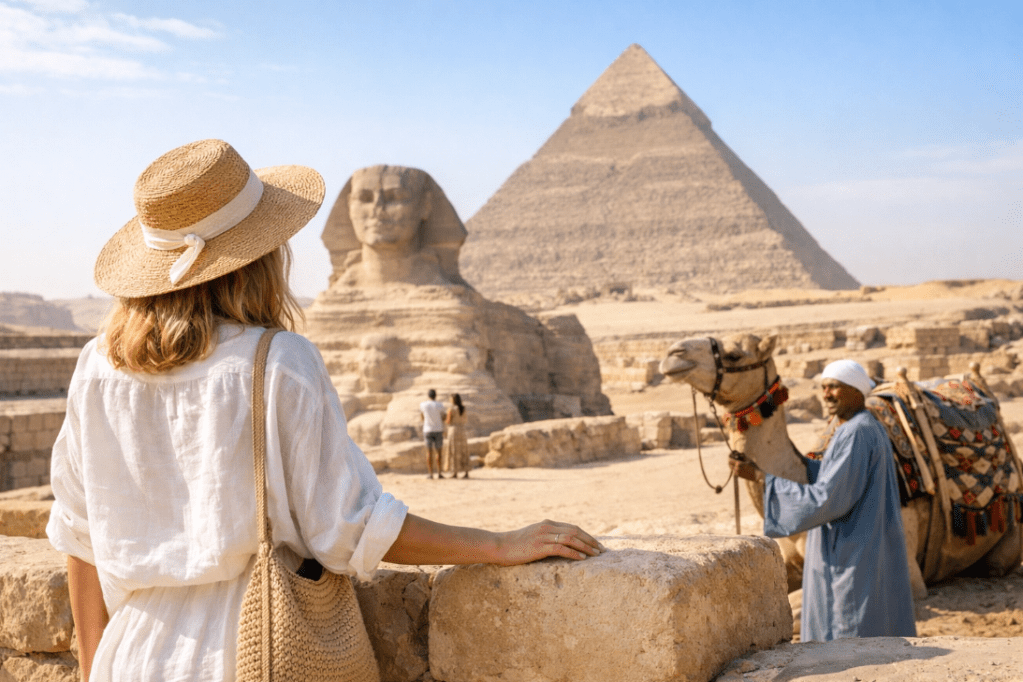
There is a specific kind of silence that exists only in the desert: a quiet so profound it feels as though the very air is holding its breath. Now imagine that stillness deepening—just for a moment—when daylight softens, shadows stretch, and the sky does something you can’t schedule, replicate, or “catch next time.”
That’s the pull of Egypt in 2027: a solar eclipse that turns an already-mythic landscape into something even more surreal. It’s the kind of once-in-a-lifetime travel moment that doesn’t quietly slip onto the calendar—it draws the world’s attention, and with it, the kind of demand that makes the best rooms, guides, and logistics disappear first.
Yes, 2026 is wonderful—especially if the Grand Egyptian Museum is your main reason (more on that below). But 2027 is the year of the eclipse, and if you want to experience Egypt with the right pacing, the right views, and none of the scramble, booking early isn’t a “nice-to-have”—it’s the whole game.
At Java Travel USA, we plan Egypt the way it should feel: smooth, private, and quietly spectacular—even when the rest of the world is trying to be there at the same time. If you’re dreaming of the kind of trip where the big moment has room to breathe, here’s why 2027 deserves the spotlight.
The Museum Year (2026) vs. The Sky Year (2027)
Let’s be honest: Egypt doesn’t need a “reason.” But it does offer two very different kinds of headline moments in back-to-back years.
- 2026 is a dream if your heart is set on the Grand Egyptian Museum (GEM) and you want to build a trip around new-gallery energy, fresh logistics, and that “first wave” feeling.
- 2027 is about something rarer: the solar eclipse—a fixed point in time that will shape everything from hotel inventory to flight availability.
If you’re the kind of traveler who likes to pair a major global event with an unhurried, high-touch itinerary, 2027 is where the magic concentrates.
The Crown Jewel (Still): The Grand Egyptian Museum (GEM)
For years, the world has caught glimpses of the Grand Egyptian Museum through construction fences and limited “soft opening” tours. By 2026, the wait is finally, officially over. This is not just a museum; it is a $1 billion masterpiece of architecture and heritage, designed to be the largest archaeological museum in the world dedicated to a single civilization.
Imagine walking into a space that houses over 100,000 artifacts. The centerpiece? The complete, breathtaking collection of King Tutankhamun. For the first time since his tomb was discovered in 1922, every single one of his treasures: from the iconic gold mask to his chariots and even his linen undergarments: will be displayed together in a sprawling, state-of-the-art gallery.
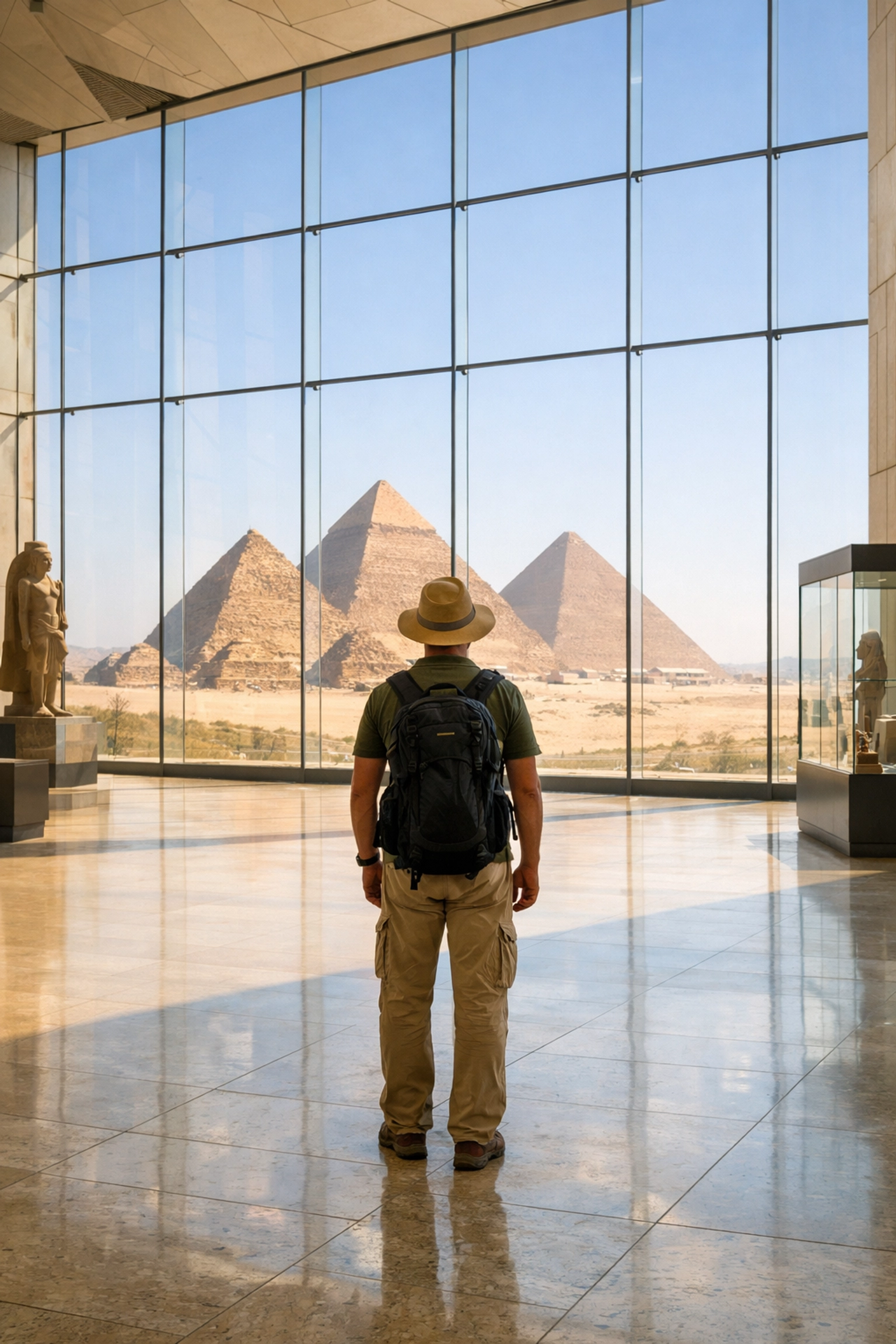
The GEM is strategically located just outside the Giza Plateau, offering framed views of the pyramids through its massive glass walls. In 2026, the experience is enhanced by AI-driven crowd management systems that ensure you aren’t shoulder-to-shoulder with hundreds of others while trying to appreciate the artistry of a sarcophagus. It’s a sophisticated, thoughtful way to engage with history that respects both the artifacts and the visitor.
And in 2027, the museum becomes an ideal counterbalance to eclipse energy: a place to slow down, step into cool, quiet galleries, and let the country’s story unfold at a human pace—before you return to the open sky for the main event.
The Eclipse Effect: Why 2027 Planning is a Different Sport
Historically, the journey between Egypt’s major sites: Cairo, Luxor, and Aswan: meant long, bumpy bus rides or navigating the quirks of older train systems. However, 2026 marks a turning point in Egyptian infrastructure.
A new high-speed rail network now whisks travelers from the bustling streets of Cairo to the open-air museum of Luxor in a fraction of the time it used to take. These “Suez Canal on rails” projects have revolutionized how we plan itineraries. Instead of losing a whole day to transit, you can spend your morning marveling at the Sphinx and your afternoon sipping hibiscus tea on a terrace overlooking the Nile in Upper Egypt.
Beyond the trains, there is a renewed focus on “Slow Travel” and sustainability. In Luxor and Aswan, you’ll find an increasing number of electric feluccas (traditional sailing boats) and solar-powered eco-resorts that allow you to enjoy the landscape without the hum of a diesel engine. It’s about returning to the rhythm of the river, but with the comforts of modern luxury.
But here’s the twist: in 2027, ease isn’t just about nicer trains and smoother transfers—it’s about availability. A solar eclipse is a global magnet. It compresses demand into a narrow window, and suddenly the “best” options aren’t just premium… they’re scarce. That’s why we plan eclipse itineraries with a different lens:
- Right place, right time: positioning you for the experience you want, not whatever’s left.
- Breathing room built in: private transfers, smart pacing, and buffers so the trip still feels like a vacation.
- Comfort under pressure: because when a destination is at peak demand, little things (check-ins, tickets, timing) can become big things—unless someone is quietly handling them.
The Art of the Private Journey: Why Big Groups are a Thing of the Past
We’ve all seen them: the long lines of tourists following a colorful umbrella, struggling to hear a guide over the noise of fifty other people. In a place as spiritually and historically significant as Egypt, that kind of experience feels like a missed opportunity.
In 2026, the trend has shifted decisively toward private, expert-led tours. Why? Because the true magic of Egypt happens in the nuances. It’s in the quiet explanation of a specific hieroglyph at the Temple of Karnak, or the ability to linger at the Valley of the Kings until the light hits the tomb paintings just right.
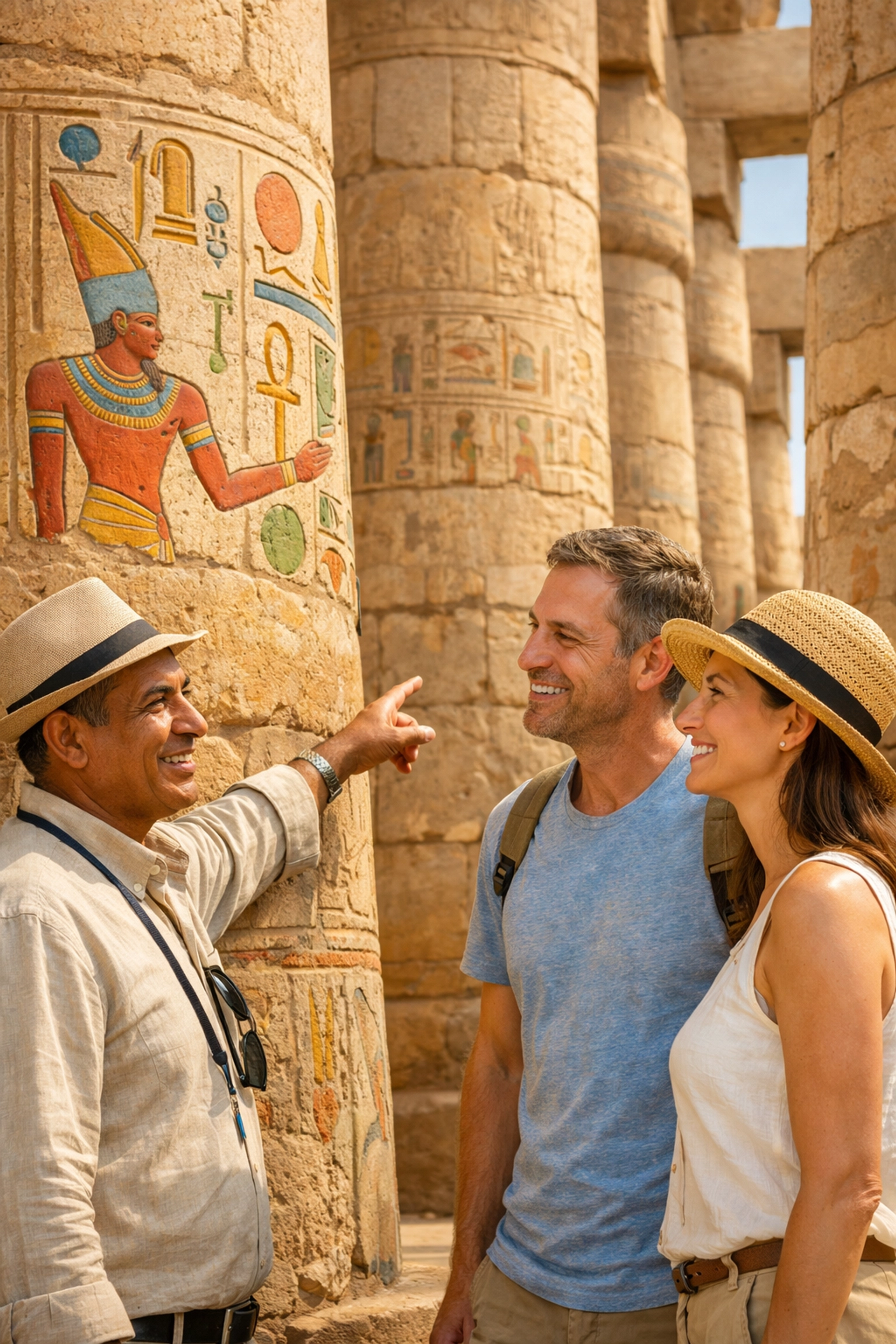
When you book through a boutique concierge service like Java Travel USA, you aren’t just getting a “driver.” You are getting a dedicated Egyptologist: a scholar who can answer your deepest questions and pivot the day based on your interests. If you want to spend two hours discussing the reign of Hatshepsut, you can. If you want to skip a crowded spot and head to a hidden boutique perfumery instead, your guide makes it happen. This level of personalization is the only way to truly “skip the crowds.” We know the secret timings: when the big cruise ships haven’t arrived yet and when the afternoon sun creates the most dramatic shadows for your photos.
How Java Travel USA Handles the Eclipse-Level Logistics (So You Don’t Have To)
Planning a trip to Egypt can feel like a logistical puzzle. Between visa requirements, internal flights, security protocols, and selecting the right Nile cruise, it’s easy to feel overwhelmed. Add a 2027 solar eclipse—with the whole world watching the same sky on the same day—and that puzzle gets tighter, faster.
This is where we step in.
At Java Travel USA, we handle the “unseen hand” of your travel experience. Our goal is for you to feel like a guest in your own life.
- VIP Arrival: From the moment you step off the plane in Cairo, our representatives are there to meet you before immigration, handling your visa and luggage so you can breeze through the airport.
- Curated Stays (That Don’t Vanish First): We don’t just book rooms; we book experiences. Whether it’s a historic suite at the Old Cataract Hotel in Aswan (where Agatha Christie wrote Death on the Nile) or a modern villa with a private view of the pyramids, we position you early for the stays that disappear when demand spikes.
- Eclipse-Ready Itinerary Design: Thoughtful timing, private transfers, and a plan that keeps you calm when crowds don’t—so the day of the eclipse feels spacious, not chaotic.
- The Stress-Free Factor: We know that even the best-laid plans can hit a snag. Before you leave, you can check out our ultimate packing checklist and our guide on avoiding TSA mistakes to get in the right headspace. Once you’re in Egypt, we manage every transfer and ticket, so your only job is to soak in the wonder.
Beyond the Giza Plateau: Secrets of the Nile
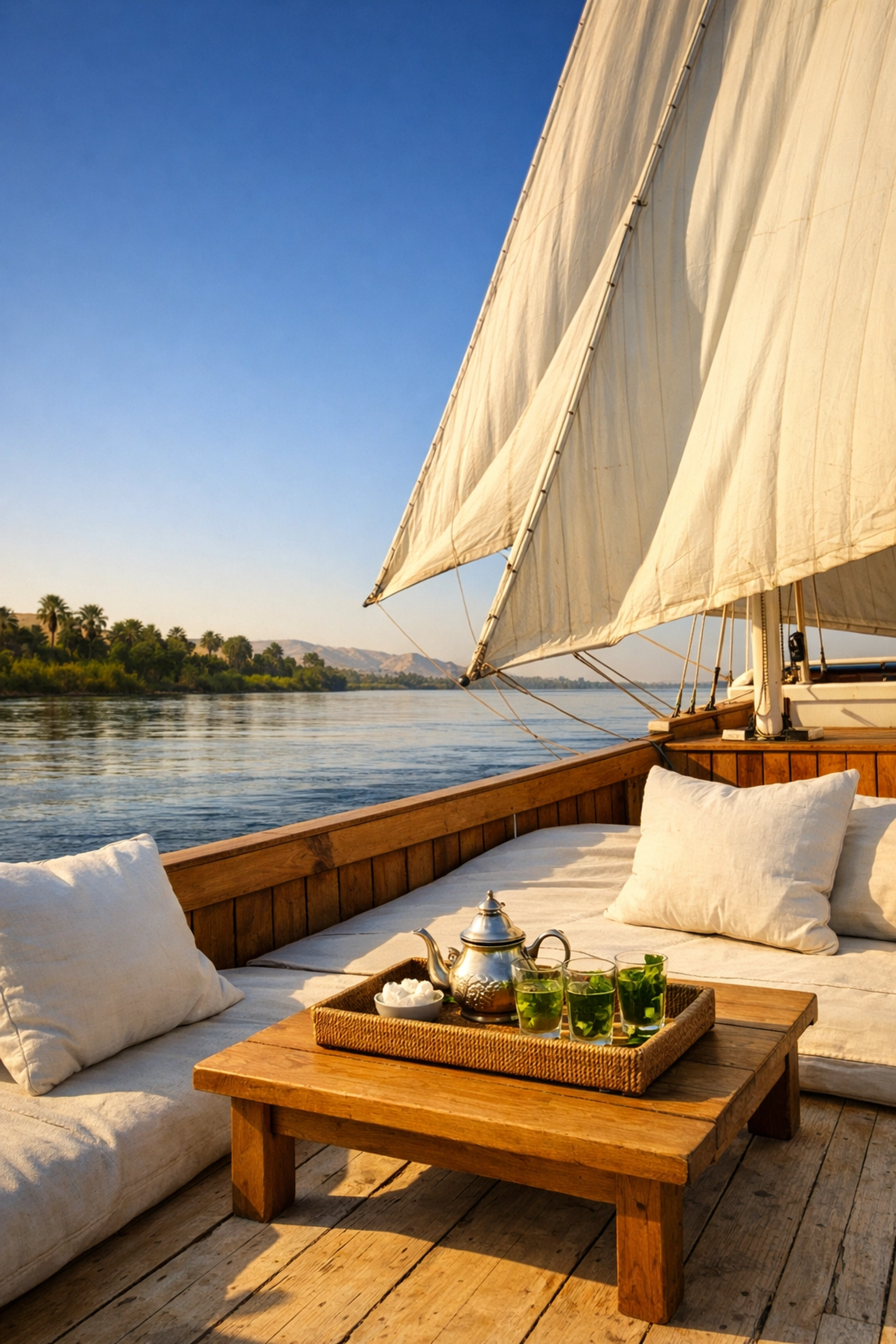
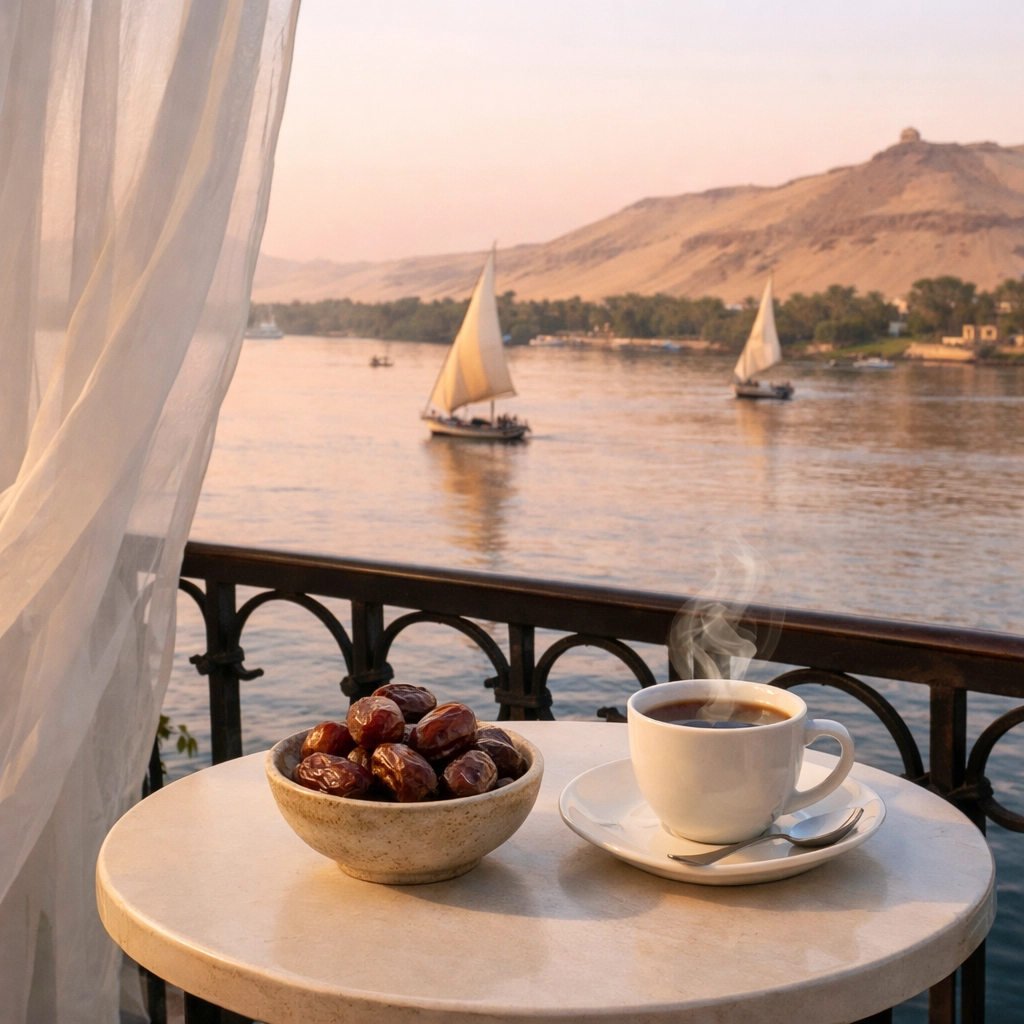
While the Pyramids are the headline, the soul of Egypt is the Nile. In 2026, we are seeing a massive surge in interest for Dahabiyas. These are traditional, twin-masted sailing boats that offer a much more intimate experience than the large 100-cabin cruise ships.
A Dahabiya typically only has 4 to 10 cabins. It moves with the wind and the current. Because these boats are smaller, they can dock at islands and ancient sites that the big ships simply can’t reach. Imagine having a private candlelit dinner on a sandbank in the middle of the Nile, with nothing but the sound of the water and the stars above. It is the height of sophisticated, quiet luxury.
For those who want to mix their history with a bit of relaxation, 2026 is also a great time to head to the Red Sea. While we often talk about the world-class diving in the Red Sea, these coastal resorts are also perfect for a “dry” luxury reset. Think world-class spas, private cabanas, and some of the best seafood in the Mediterranean and Middle East regions. It’s the perfect way to bookend a busy week of sightseeing.
Why Seek the Hidden?
You might wonder, “With tourism growing, won’t it be more crowded than ever?” The irony of Egypt in 2026 is that as the country becomes more popular, it is also becoming more accessible in its “off-the-beaten-path” areas.
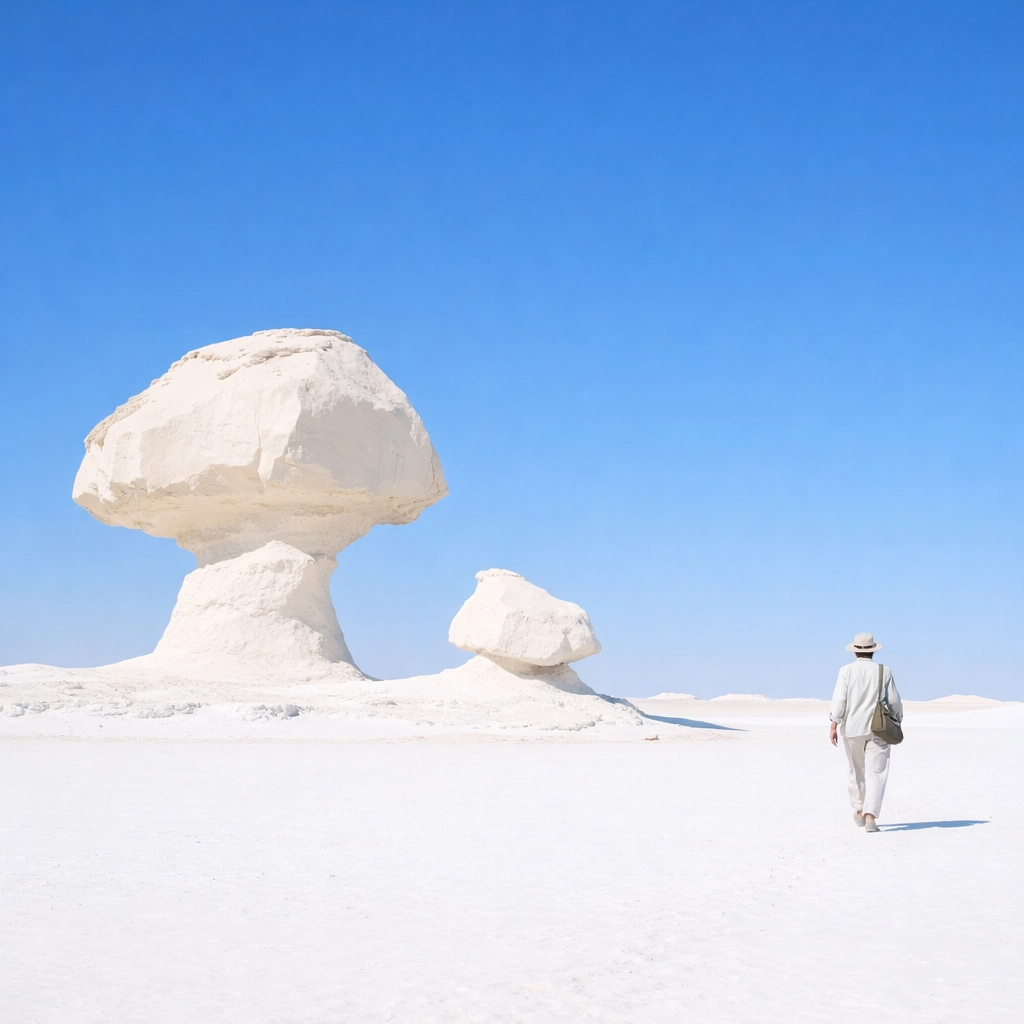
The laser-cleaning of temples like Esna and Karnak has revealed vibrant, original colors that were hidden for centuries under soot and dust. It’s like seeing these structures in technicolor for the first time. Furthermore, the expansion of tourism into places like the White Desert: with its chalk-white rock formations that look like an alien landscape: offers a profound sense of solitude that balances the energy of Cairo.
Your 2027 Eclipse Invitation (And the Quiet Case for Booking Early)
Egypt is a land that rewards the curious and the well-prepared. It is a place where time slows down, where you can feel the pulse of history beneath your feet. In 2027, that feeling gets an added layer: a skywatching moment that won’t repeat itself in the same way, in the same place, with the same atmosphere.
If 2026 is your year for the Grand Egyptian Museum—fresh, new, and dazzling—think of it as the perfect “museum-first” season. But if you want the trip that will stay with you for decades, 2027 is the year of the solar eclipse, and the world is already circling the date.
Whether you are dreaming of standing between the paws of the Sphinx, sailing the Nile on a private boat, visiting the GEM in unhurried comfort, or building your journey around an eclipse viewing plan that feels calm and intentional, we are here to make it happen.
Ready to start planning your 2027 Egypt Solar Eclipse trip? Let’s chat. We’ll handle the logistics, the crowds, and the details—so when the light shifts, you can simply look up.
Curious about other ways to spend your 2026? Check out our guides on traveling with non-divers or discover why the Northern Lights are also reaching a peak this year!

 Java Travel USA
Leave a comment