
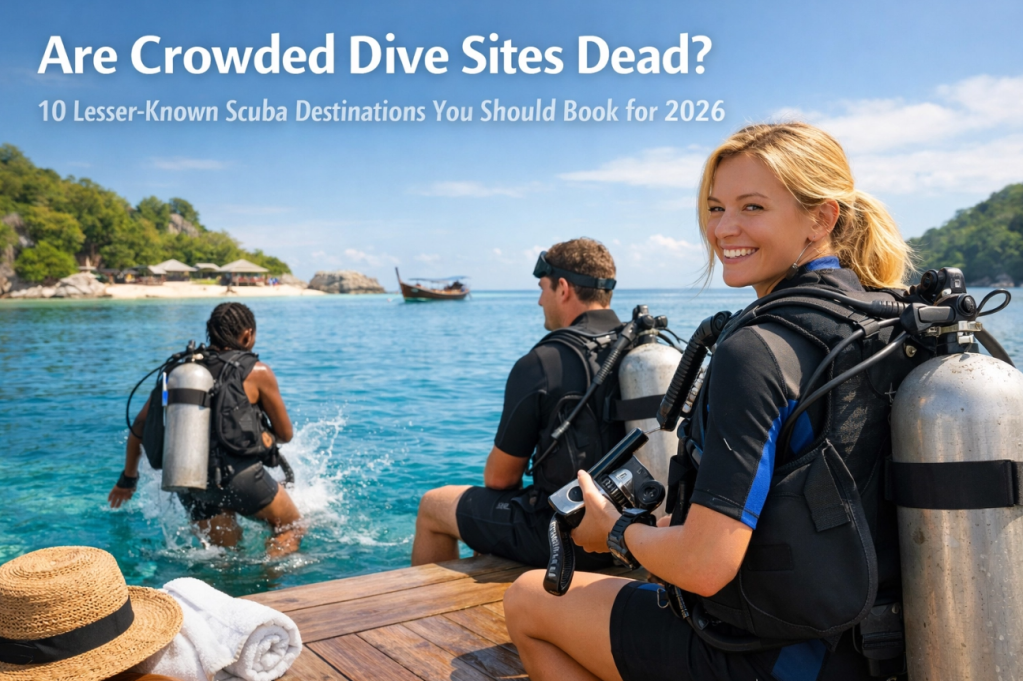
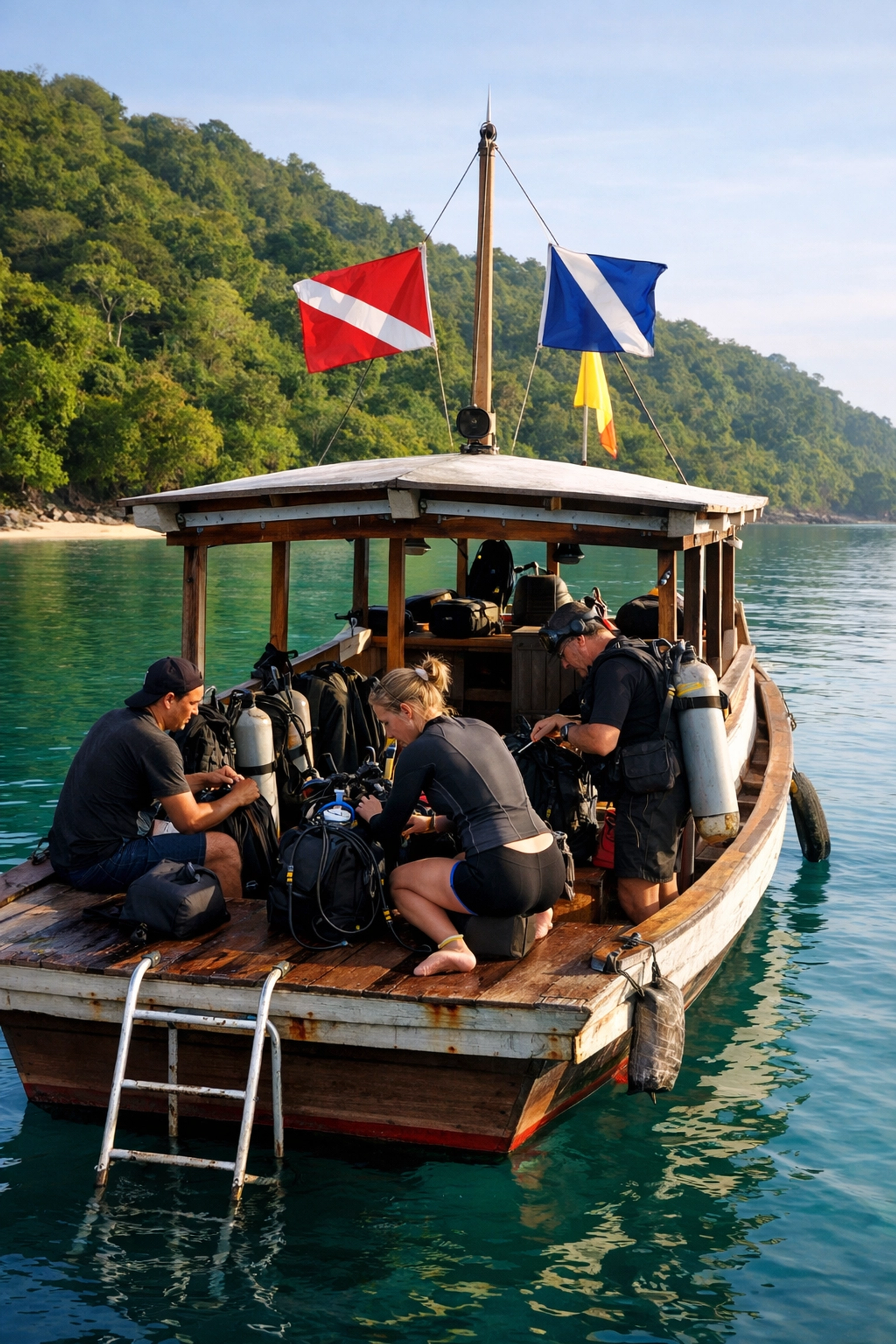
The boat rocks gently as you gear up. You glance around, there’s your buddy, the dive master, and maybe four other divers. That’s it. No elbows bumping underwater, no finning battles over the perfect photo angle, no coral breakage from the group ahead of you. Just blue water, pristine reef, and the kind of silence that makes you remember why you fell in love with diving in the first place.
This isn’t a fantasy. It’s just what happens when you skip the Instagram hotspots and book somewhere the crowds haven’t discovered yet.
Why the Famous Sites Are Feeling the Pressure
Let’s be honest, the Great Barrier Reef, Koh Tao, and similar bucket-list destinations are still incredible. But they’re also showing visible signs of stress. Coral breakage, altered fish behavior, and day boats carrying 150+ divers with varying experience levels have taken their toll. Maya Bay had to close entirely in 2018 just to recover (and it worked, coral cover increased when visitor limits were reintroduced).
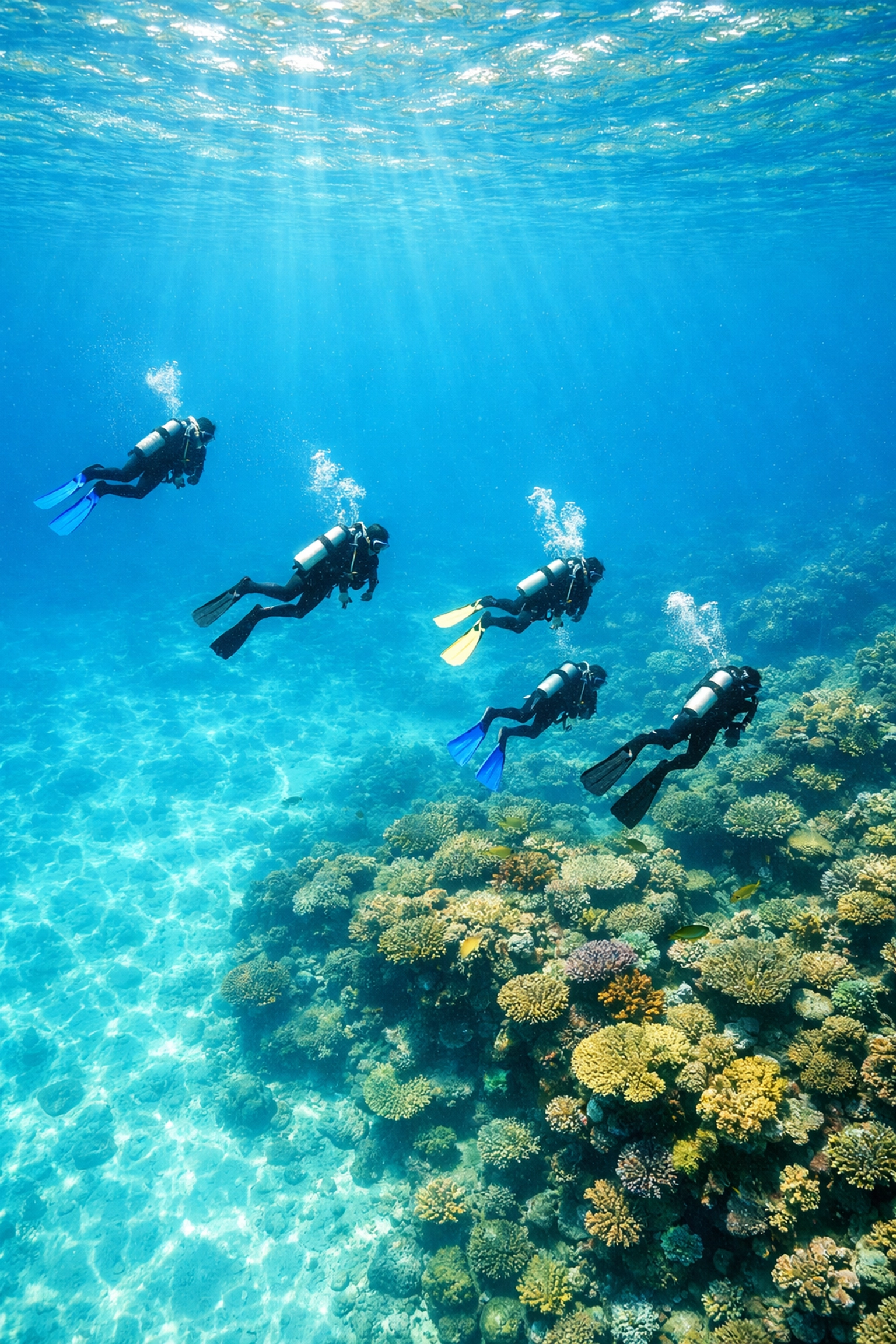
The good news? The problem isn’t diving itself. It’s density. Remote sections of even heavily-visited areas remain healthy when managed through smaller liveaboards and strict environmental policies. Places like Palau and Raja Ampat charge visitor fees that fund marine patrols, proving tourism and reef protection can coexist beautifully.
The even better news? Experienced divers are already shifting toward second-tier and emerging destinations. You just need to know where to look.
The New Wave: 10 Destinations Where You’ll Actually Have Space to Breathe
1. Dominica – The Nature Island’s Underwater Secret
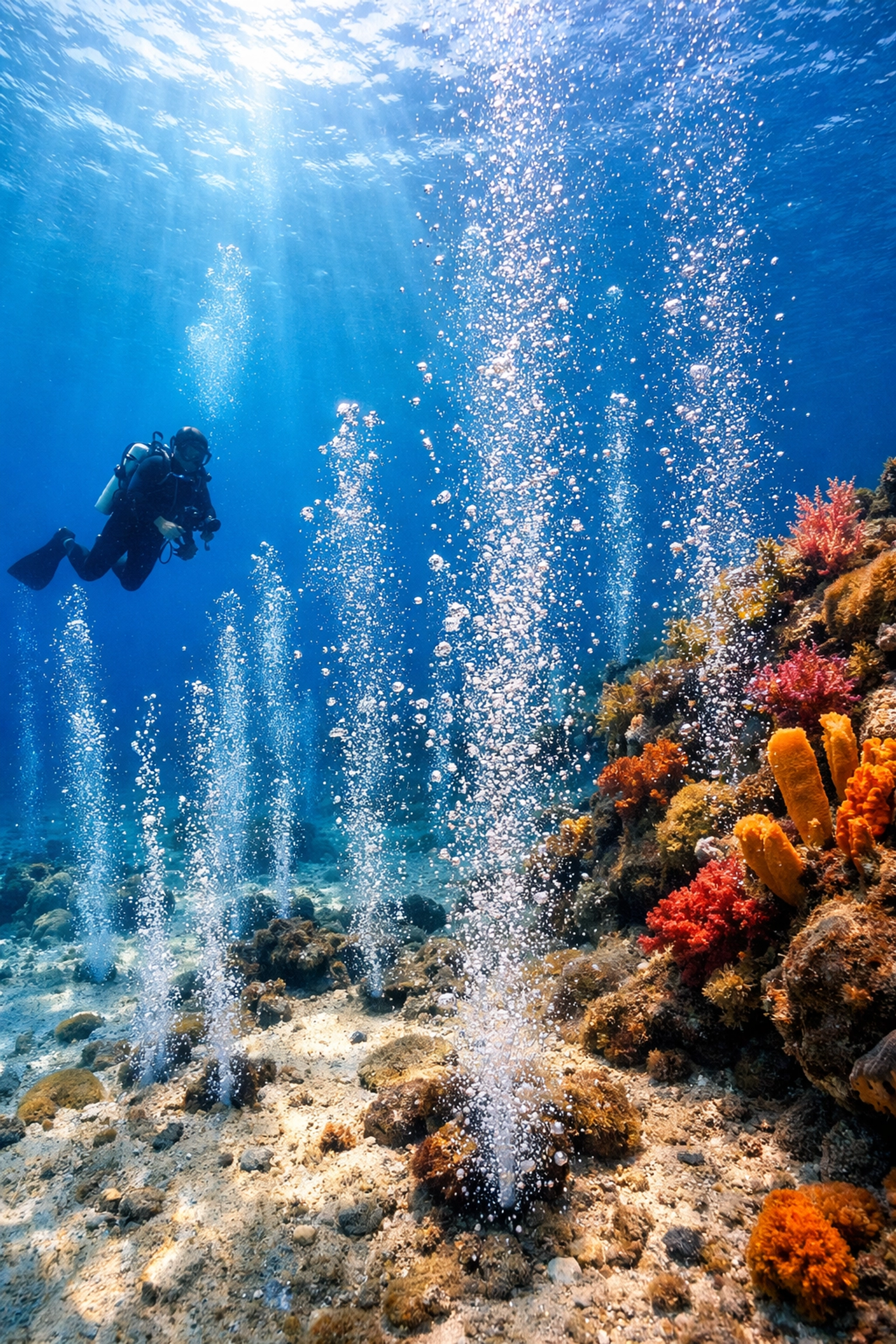
Dominica doesn’t do mass tourism. There are no cruise ship docks, no sprawling resorts, and definitely no dive site traffic jams. What you will find: volcanic underwater topography, champagne reefs where geothermal vents create bubbles through the sand, and healthy populations of seahorses and frogfish.
The island’s commitment to eco-tourism means strict diver limits and operators who genuinely care about reef health. Sperm whales pass through between November and March, and if you’re lucky, you might catch them on a safety stop.
2. St. Helena – The Atlantic’s Best-Kept Secret
Getting here requires either a very long flight or a mail ship from Cape Town, which means St. Helena remains blissfully uncrowded. The payoff? Whale sharks from December to March, manta rays, and endemic fish species you won’t see anywhere else.
The island’s isolation has preserved its reefs in near-pristine condition. You’ll dive with small local operators who know every cleaning station and shark aggregation site. The water stays warm year-round, and visibility regularly exceeds 30 meters.
3. Alor, Indonesia – Where the Current Brings Life
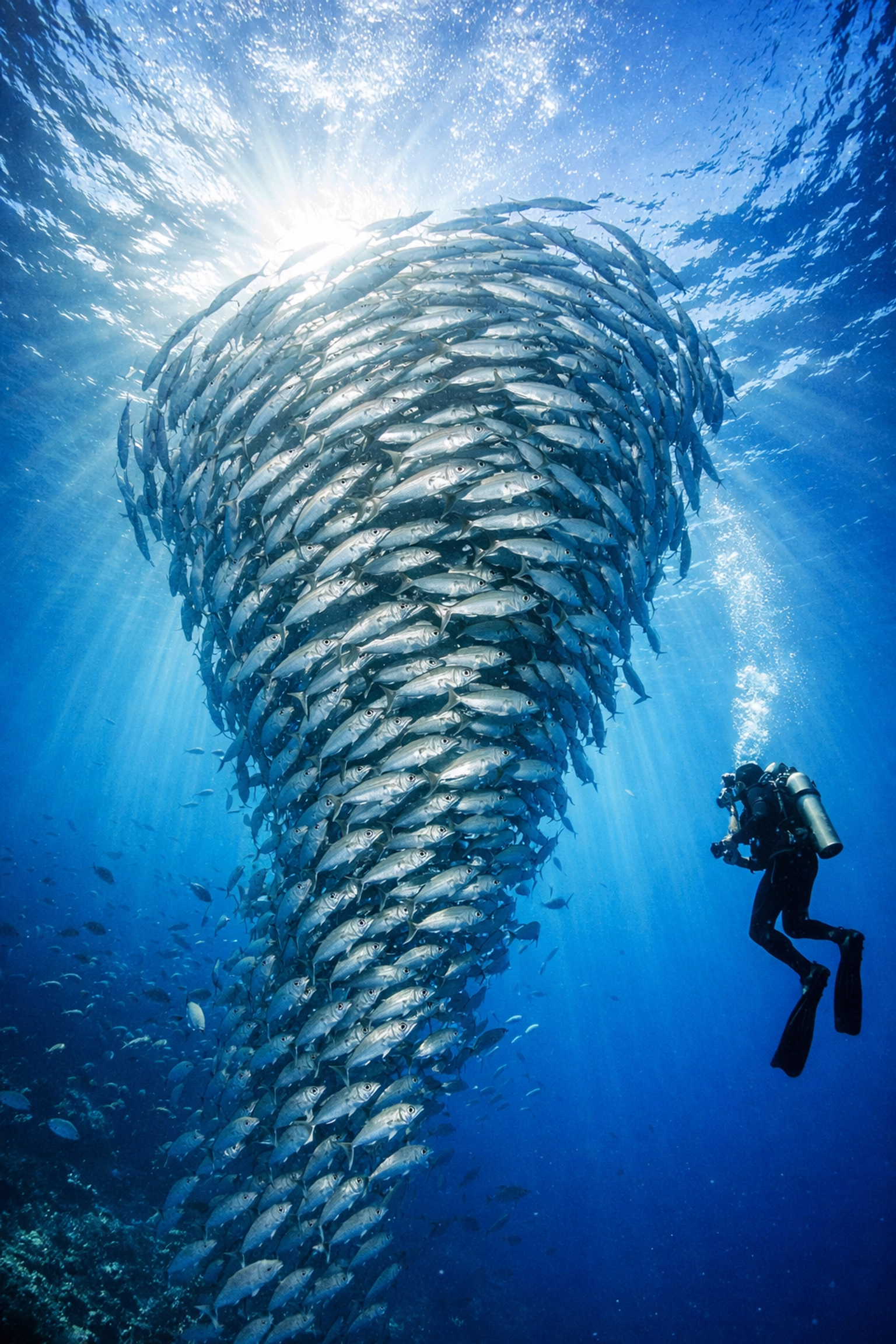
While Raja Ampat gets all the glory, Alor sits quietly in eastern Indonesia with equally spectacular diving and a fraction of the visitors. Strong currents mean incredible drift dives along walls covered in soft corals and sea fans. The fish life is extraordinary, you’ll encounter massive schools of tuna, barracuda, and trevally, plus reliable muck diving for the macro enthusiasts.
Most operators here run small liveaboards with just 6-10 divers. The local villages still practice traditional weaving and welcome visitors genuinely, not as part of a tourist performance.
4. The Forgotten Islands, Indonesia – As Remote as It Gets
Even more isolated than Alor, the Forgotten Islands (the Banda Sea region) require liveaboard access and offer some of the most pristine reefs in Southeast Asia. Hammerhead sharks, mobula rays, and snake schools (yes, sea snakes gather in mating aggregations here) are regular sightings.
Expect to see whales and dolphins on surface intervals, and to dive sites that see maybe 50 divers per year total. The catch? It takes commitment to get here, but that’s exactly what keeps it special.
5. Pemba Island, Tanzania – The Green Island
Just north of Zanzibar, Pemba offers the same Indian Ocean warmth with far fewer divers. The channels between Pemba and the mainland create nutrient-rich waters that support large marine life, including whale sharks, humpback whales during migration, and healthy shark populations.
The coral reefs here rival those of the Maldives in color and diversity, but you’ll share them with a handful of other divers at most. Several eco-lodges have opened in recent years, making access easier while maintaining strict environmental standards.
6. Saba – The Caribbean’s Hidden Wall
This tiny Dutch Caribbean island rises straight out of the ocean, creating dramatic underwater walls that plunge hundreds of meters. Saba Marine Park has some of the strictest regulations in the Caribbean, mooring buoys only, no anchoring, mandatory briefings, and limited permits.
The result? Some of the healthiest Caribbean reefs anywhere. You’ll see queen angels, massive barrel sponges, and healthy hard coral cover that’s increasingly rare elsewhere in the region. Hurricane season aside, conditions stay excellent year-round.
7. Djibouti – Whale Sharks in the Gulf of Tadjoura
Djibouti doesn’t exactly scream “dive destination,” but between October and January, the Gulf of Tadjoura becomes one of the planet’s most reliable whale shark encounters. We’re talking dozens of juveniles feeding on plankton blooms, often in water so clear you can freedive with them.
Beyond the whale sharks, you’ll find pristine reefs, World War II wrecks, and some of the best manta ray encounters in the Red Sea region. Tourism infrastructure is basic but improving, and you’ll have most sites to yourself.
8. Flores, Indonesia – Komodo’s Quieter Neighbor
Komodo gets the headlines, but Flores offers similar diving with far less pressure. The same nutrient-rich currents pass through, bringing mantas, sharks, and incredible macro life. Batu Bolong and Castle Rock see fewer divers here, and local operators schedule dives to avoid any crowding.
Stay in Labuan Bajo and you can also island hop to less-visited sites around Komodo, hitting the famous spots during off-peak times when conditions are best and crowds thinnest.
9. Sudan – Red Sea Diving Without the Crowds
While Egypt’s Red Sea sites recover from years of heavy use, Sudan’s liveaboard routes showcase what the entire region looked like decades ago. Hammerhead sharks at Sha’ab Rumi, pristine coral gardens, and Jacques Cousteau’s famous underwater habitat at Precontinent II.
You’ll need to book through established operators due to permit requirements, but that keeps numbers genuinely limited. Think 12-14 divers per boat, max, on week-long itineraries that cover the absolute best sites.
10. Palau’s Outer Islands – Beyond the Famous Sites
Yes, Palau is well-known. But while everyone dives Blue Corner and German Channel, the outer islands, Peleliu, Angaur, and Kayangel, offer equally spectacular diving with a fraction of the traffic. You’ll need a liveaboard to access these areas, but the payoff includes rare encounters with nautilus (yes, the spiral-shelled living fossil), massive schools of fish, and walls that have never been touched.
Palau’s conservation fees fund serious enforcement, so even well-visited sites remain healthy. Push farther out and you’ll have entire atolls to yourself.
Booking These Hidden Gems: What You Need to Know
Most of these destinations require advance planning. Liveaboards fill up 6-12 months early for peak seasons, and boutique operators in places like St. Helena and Dominica have limited capacity year-round.
Work with a travel agency that specializes in dive travel: someone who knows which operators prioritize small groups and environmental practices over cramming boats full. Hidden fees and booking timing matter more in remote destinations, so getting expert guidance saves both money and headaches.
Also consider travel insurance that covers dive-specific incidents and evacuation from remote areas. These aren’t places with hyperbaric chambers on every corner.
The Reward for Going Off-Script
The truth is, crowded dive sites aren’t dead: they’re just tired. And while they recover through better management and visitor limits, the rest of the diving world is wide open. Sites where you’ll see more sharks than selfie sticks. Reefs where your biggest challenge is choosing between the frogfish on your left or the passing eagle ray above.
The divers who explore these places in 2026 will look back in ten years and remember them as pristine, uncrowded, and absolutely worth the extra effort to reach. The question is whether you’ll be one of them.
Ready to book something extraordinary? Reach out to Java Travel USA and let’s find you a corner of the ocean that still feels like a secret. The best sites aren’t crowded yet; but they won’t stay hidden forever.

 Java Travel USA
Leave a comment