
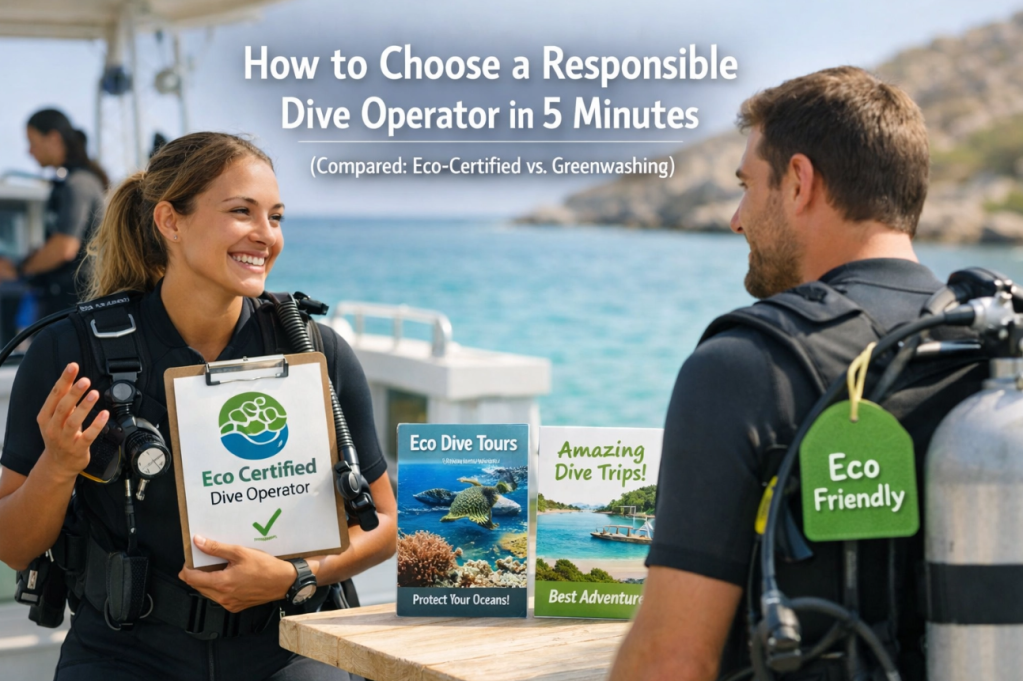
Picture this: you’re standing at the edge of a boat, fins on, mask adjusted, about to drop into turquoise water where coral gardens sway in the current. You’ve chosen this dive operator because their website promised “eco-friendly practices” and “ocean conservation.” But as you descend, you notice the dive master touching coral, the boat anchor dragging through the reef, and single-use plastic bottles scattered across the deck.
That sinking feeling? It’s called greenwashing, and it’s more common than you’d think.
The good news is that you don’t need a marine biology degree to spot the difference between genuine ocean stewards and operators who just slap a turtle logo on their brochure. In fact, you can evaluate a dive operator’s environmental commitment in about five minutes. Here’s how.
Why This Actually Matters (Beyond Feeling Good)
Let’s be honest, we all want to feel like we’re making the right choices. But this isn’t just about easing your conscience while you’re underwater photographing sea turtles.
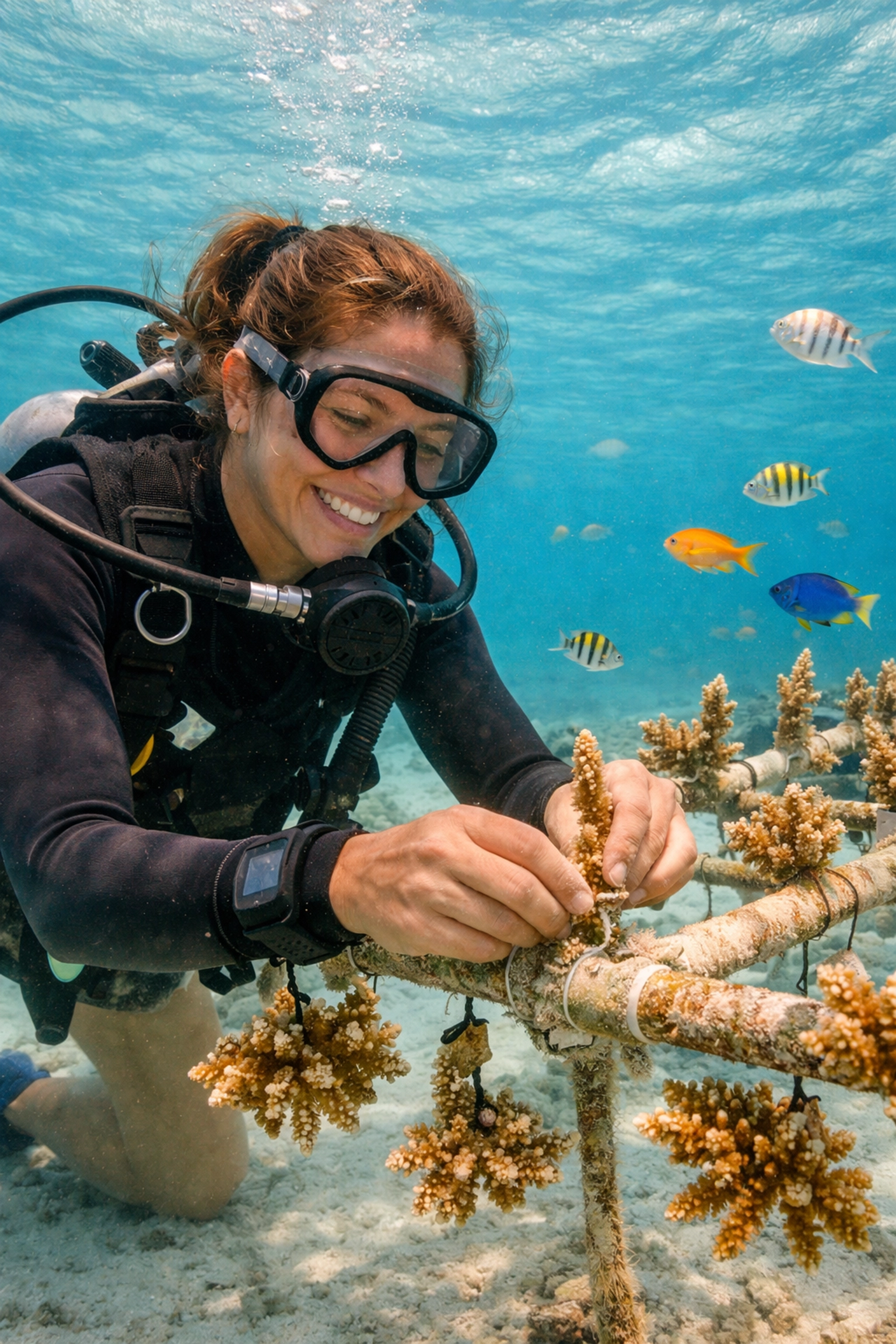
Every dive creates an impact. The boats we use, the reefs we visit, the wildlife we encounter, all of it responds to how we show up. Responsible dive operators actively work to minimize harm and, in many cases, contribute to reef restoration and marine research. The others? They’re slowly destroying the very ecosystems that make diving magical in the first place.
When you choose a truly responsible operator, you’re voting with your dollars. You’re telling the industry that conservation matters, that cutting corners isn’t acceptable, and that the ocean is worth protecting for generations of divers to come.

What “Eco-Certified” Actually Means
Real certifications aren’t just fancy badges, they represent third-party verification that an operator meets specific environmental standards. Look for these recognized programs:
Green Fins is perhaps the gold standard for dive centers and operators. Developed by the UN Environment Programme, it assesses everything from briefing procedures to boat handling and coral protection. Operators must pass regular on-site assessments, they can’t just pay for the logo and call it a day.
Blue Star and similar programs evaluate operators based on concrete criteria: Do they conduct environmental briefings? Are dive masters trained in reef-safe practices? Do they monitor their environmental impact?
Here’s what separates real certifications from window dressing: accountability. Legitimate programs require regular audits, ongoing training, and measurable environmental practices. They’re not one-time payments for a certificate to hang on the wall.
The Greenwashing Red Flags You Can Spot in Minutes
Now for the fun part, becoming a greenwashing detective. These red flags practically wave themselves at you once you know what to look for.
Vague Language Everywhere: “We love the ocean!” and “Eco-friendly since 2015!” sound nice, but what do they actually mean? Genuine operators get specific: “We use mooring buoys to eliminate anchor damage” or “Our boats run on biodiesel.” If you’re reading a website or brochure full of environmental buzzwords but zero concrete practices, that’s your first clue.
No Verification or Details: Ask which certification programs they’re part of, and watch what happens. A responsible operator will proudly tell you about their Green Fins assessment or PADI Green Star status, complete with membership numbers you can verify. A greenwashing operator will get vague, change the subject, or mention a “certification” they created themselves.
Environmental Claims Without Evidence: “We protect coral reefs!” Okay, how? Through staff training? Reef restoration projects? Limiting group sizes? Actual conservation involves measurable actions, not just good intentions.
Your 5-Minute Evaluation Checklist
You don’t need hours to evaluate an operator, just a few strategic questions and observations. Here’s your quick checklist:
Check Their Website (2 minutes): Look for specific environmental practices spelled out clearly. Do they mention recognized certifications? Can you verify those certifications through the issuing organization? Are there photos or descriptions of actual conservation work, or just stock images of sea turtles with generic text?
Ask Three Direct Questions (2 minutes): “What environmental certifications do you hold?” “How do you protect the reefs you dive?” and “What’s your policy on wildlife interaction?” The quality of their answers tells you everything. Specific, detailed responses indicate real commitment. Hesitation or marketing speak suggests otherwise.
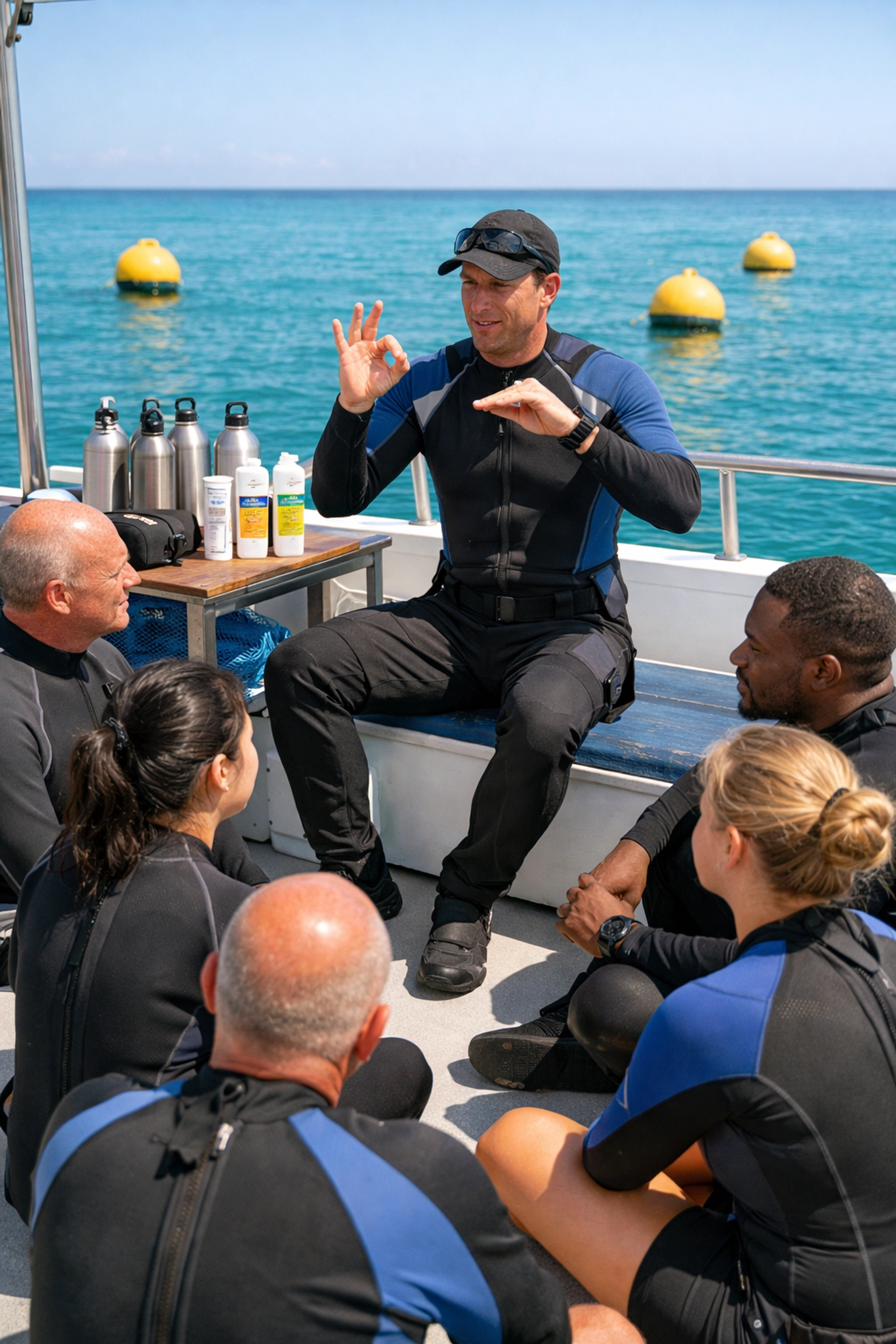
Look at the Practical Details (1 minute): Check if they mention briefings about coral etiquette, limited group sizes, mooring systems instead of anchors, and reef-safe sunscreen policies. These aren’t glamorous details, but they’re where real protection happens.
What Responsible Really Looks Like
True ocean stewardship shows up in everyday practices, not just marketing materials. You’ll notice it in the dive briefing that spends five minutes on buoyancy control and reef etiquette. In the dive master who positions themselves below divers to prevent fin kicks on coral. In the refillable water stations instead of plastic bottles.
Responsible operators maintain their equipment meticulously, not just for safety, but because well-maintained gear means fewer emergency surface intervals that can damage reefs. They limit group sizes even when it means less revenue. They participate in reef monitoring programs and share their data with marine researchers.
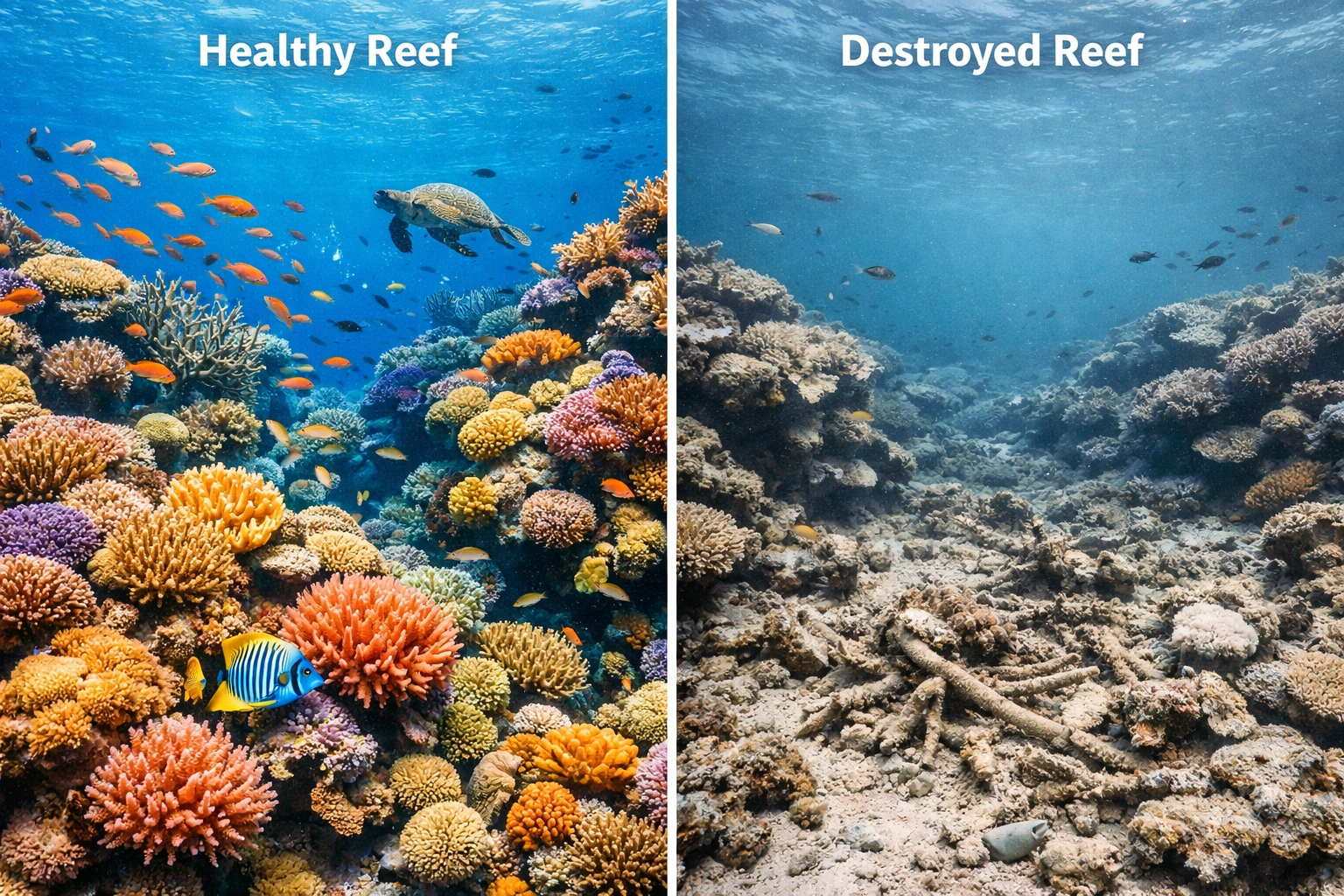
Many also contribute to active conservation: coral nursery programs, lionfish removal initiatives, beach cleanups, and educational programs for local communities. These aren’t PR stunts, they’re ongoing commitments that cost time and money but protect the marine environments they depend on.
The Questions That Expose Everything
When you’re talking to a dive operator, whether by email, phone, or in person, these questions cut through the marketing:
“Can you walk me through a typical dive briefing?” Listen for whether reef protection and buoyancy are emphasized, or if it’s all logistics and fun.
“What happens if a diver touches or damages coral?” Responsible operators have clear protocols and use these moments as teaching opportunities.
“How do you handle your waste?” Everything from engine oil to kitchen waste to guest trash should have a clear, environmentally sound disposal process.
“What’s your policy on feeding fish or touching wildlife?” The only acceptable answer is “we don’t allow it.” Full stop.
Why Java Travel USA Only Partners with Verified Operators
At Java Travel USA, we’ve done the vetting work for you. Every dive operator we work with holds verified certifications and demonstrates consistent environmental practices, not because it looks good on their website, but because it’s how they operate every single day.
We’ve walked their docks, met their staff, reviewed their training programs, and verified their certifications with issuing organizations. When you book a dive trip with us, you’re not just getting incredible underwater experiences, you’re supporting operations that actively protect the marine environments you’ll be exploring.
Making Your Choice
Here’s the beautiful truth: choosing a responsible dive operator isn’t complicated once you know what to look for. It takes about five minutes of asking the right questions and reading between the marketing lines.
And yes, sometimes responsible operators cost a bit more. Proper training, smaller groups, certified practices, and conservation programs require resources. But consider what you’re actually paying for: the chance to dive in healthy ecosystems that will still be thriving years from now. The knowledge that your presence underwater isn’t causing harm. The satisfaction of supporting businesses that treat the ocean with the respect it deserves.
The ocean doesn’t need perfect divers: it needs conscious ones. Divers who care enough to ask questions, who choose operators based on practices rather than just price, and who understand that every dive is either part of the problem or part of the solution.
Next time you’re researching dive operators, take those five minutes. Look past the tropical fish logos and “we love the ocean” taglines. Ask specific questions. Verify certifications. Check for concrete practices.
The reef you save might be the one you’re planning to dive next year: and the year after that, and the decade after that. Because that’s what responsible diving makes possible: oceans that endure, ecosystems that thrive, and underwater worlds that continue to take our breath away.
Ready to dive with operators who genuinely protect the places they love? Reach out to Java Travel USA and let’s plan your next underwater adventure with certified, responsible operators who are making a real difference beneath the waves.
 Java Travel USA
Leave a comment