

Picture this: you’re floating 30 feet below the surface, surrounded by vibrant coral and tropical fish, when you spot something that makes your heart race. Not just another pretty fish: but data that could help save an entire ecosystem. Welcome to the world of citizen science diving, where your vacation becomes a meaningful contribution to marine conservation.
Gone are the days when recreational divers were just passive observers of underwater beauty. Today’s eco-conscious travelers want their adventures to matter, and citizen science diving delivers exactly that opportunity. You don’t need a marine biology degree or years of research experience: just curiosity, basic diving skills, and a willingness to follow simple protocols that turn your dive logs into valuable scientific data.
Whether you’re planning a solo adventure or organizing a group trip, these seven approaches will transform your next diving vacation into something truly impactful. And the best part? At Java Travel USA, we’ve cultivated relationships with dive operators and research organizations worldwide who make participating in these programs seamless and rewarding.
Join the Global Fight Against Marine Debris
The Dive Against Debris program stands as the world’s largest underwater citizen science initiative, and it’s surprisingly addictive once you start. Every dive becomes a treasure hunt: except you’re hunting for trash instead of gold, and your findings contribute to a massive global database that researchers and policymakers use to combat ocean pollution.
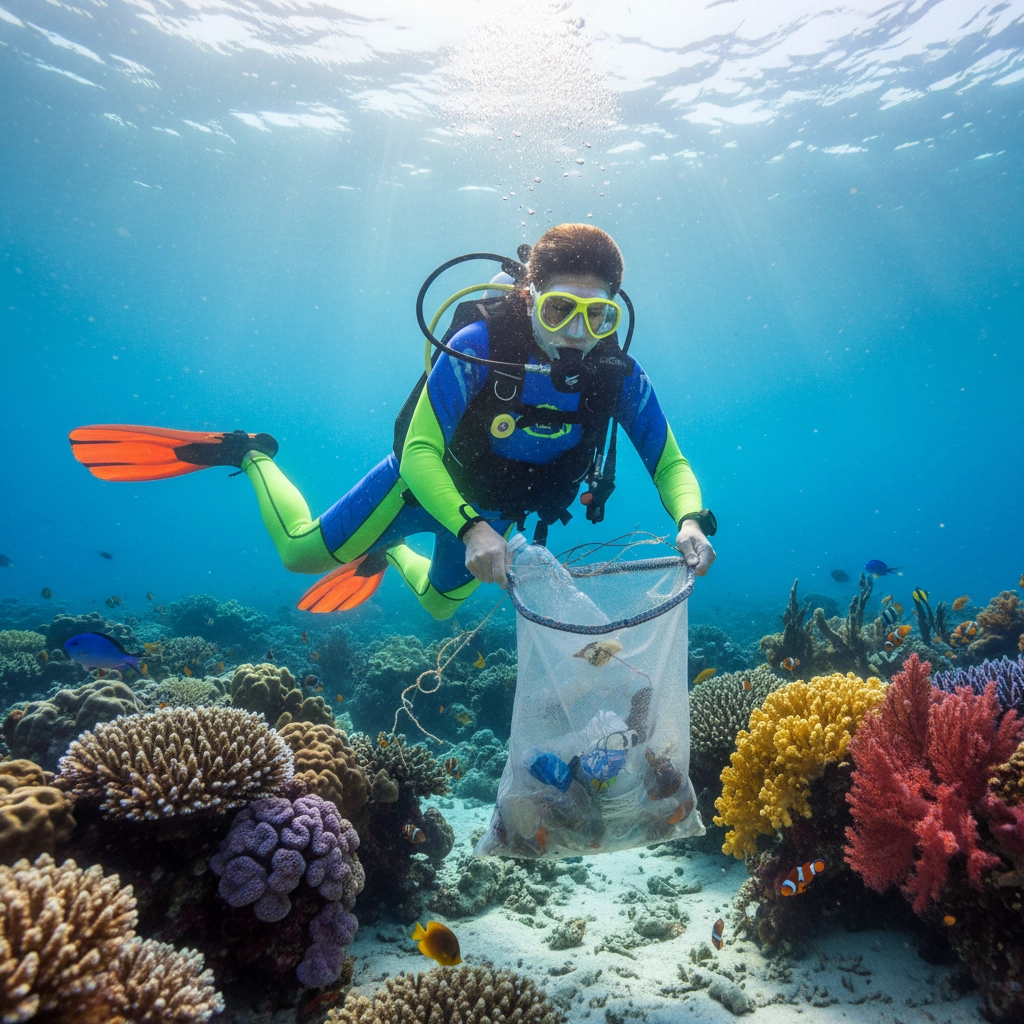
Here’s how it works: during your regular dive, you’ll document and collect debris using special collection bags provided by participating dive centers. The magic happens when you surface and log your findings into the global database, noting everything from plastic bottles to fishing nets. This data reveals pollution patterns that scientists use to develop targeted cleanup strategies and influence policy decisions.
Group divers love this program because it adds a collaborative element to every dive: teams can cover more area and make collection more efficient. Solo travelers appreciate how easily it integrates into any dive trip without requiring special scheduling or additional fees. Many of our partner dive operators in destinations like Cozumel, the Philippines, and Indonesia have made debris documentation a standard part of their dive briefings.
Become a Coral Health Detective
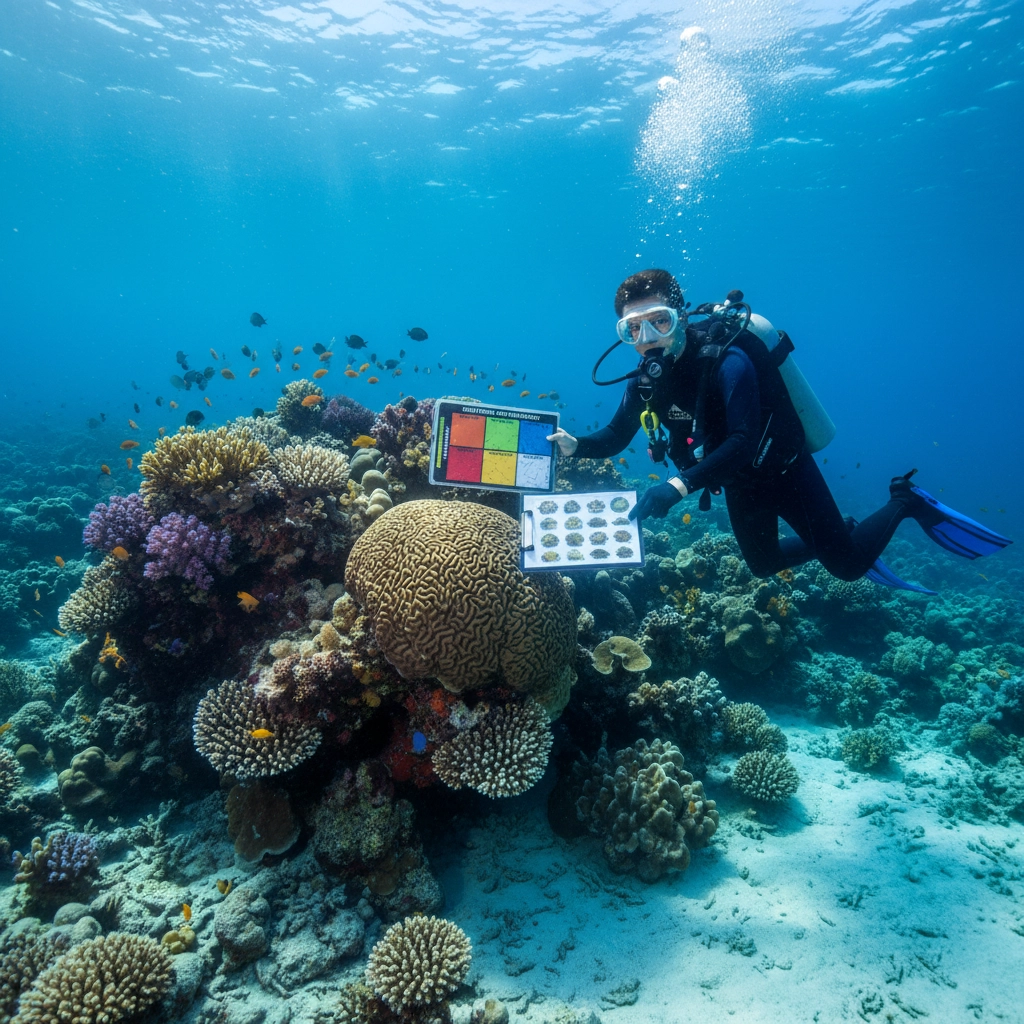
Coral monitoring programs like CoralWatch and Reef Check transform you into an underwater detective, documenting the health of reef systems across more than 75 countries. These programs teach you to assess coral color, coverage, and signs of bleaching or disease using standardized methods that make your observations scientifically valuable.
The training is straightforward: most programs provide a brief session before your first survey dive, teaching you to use color charts and identification guides. Within a few dives, you’ll develop an eye for subtle changes that indicate coral stress or recovery. Your documentation becomes part of long-term monitoring efforts that reveal how reefs respond to warming waters, pollution, and conservation interventions.
What makes this particularly rewarding is seeing the direct impact of your contributions. Reef Check data has influenced the creation of marine protected areas and guided coral restoration efforts worldwide. For group travelers, coral monitoring creates shared purpose and generates fascinating discussions about marine ecosystem health during surface intervals.
Document Individual Marine Giants
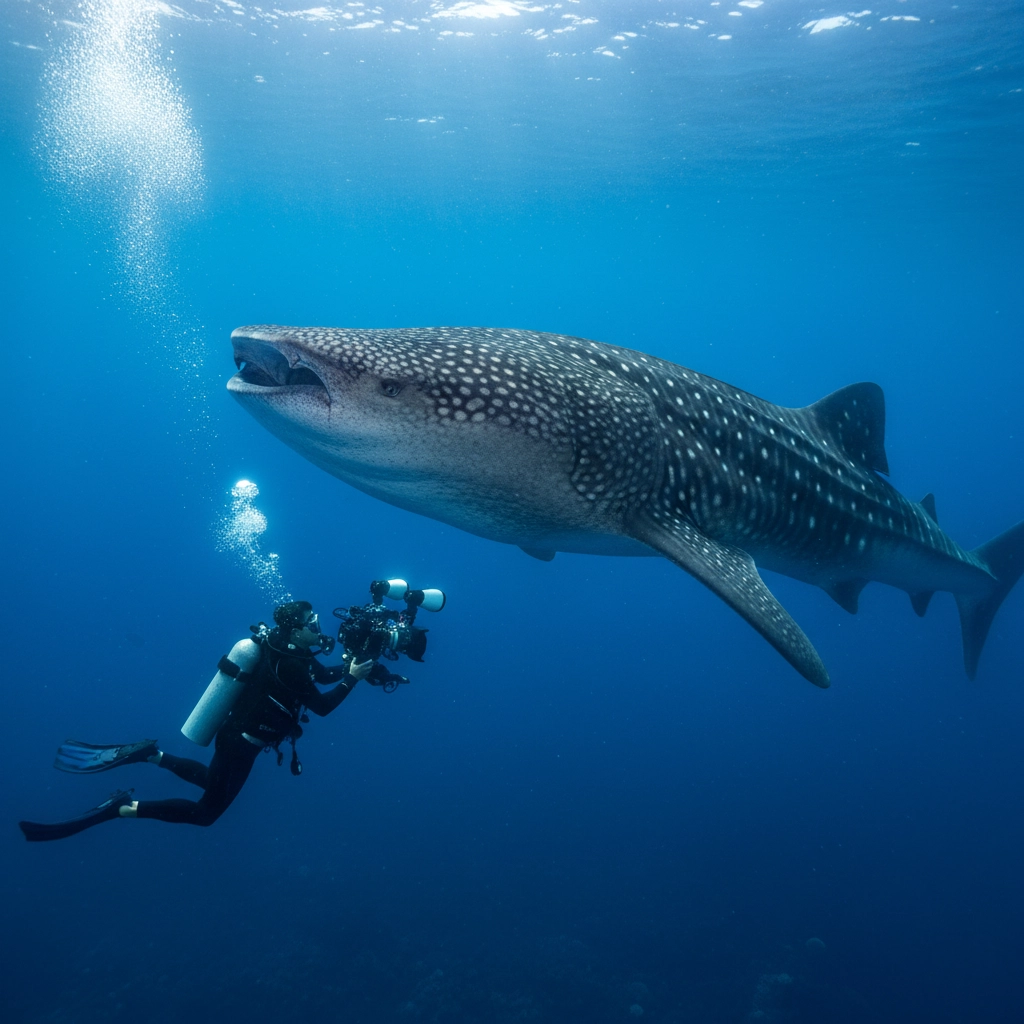
Programs like Wildbook for Whale Sharks and Manta Matcher turn every encounter with megafauna into a scientific contribution. These databases rely on divers to photograph and report sightings, creating comprehensive records that track individual animals across oceans.
Each whale shark has unique spot patterns, like fingerprints, and manta rays have distinctive markings that allow researchers to identify individuals and monitor their movements over years or even decades. When you photograph these animals and upload your images, sophisticated pattern recognition software matches them to existing records or creates new profiles for previously unknown individuals.
The databases extend far beyond large animals now: current projects include seahorses, turtles, various shark species, and even jellyfish. Solo divers often find this particularly engaging because it rewards patience and careful observation skills, while group divers can coordinate to ensure comprehensive coverage of encountered species.
Java Travel USA works with dive operators in prime wildlife destinations like the Maldives, Philippines, and Mexico, where encounters with these species are frequent and operators are trained in proper documentation techniques.
Conduct Fish Population Surveys
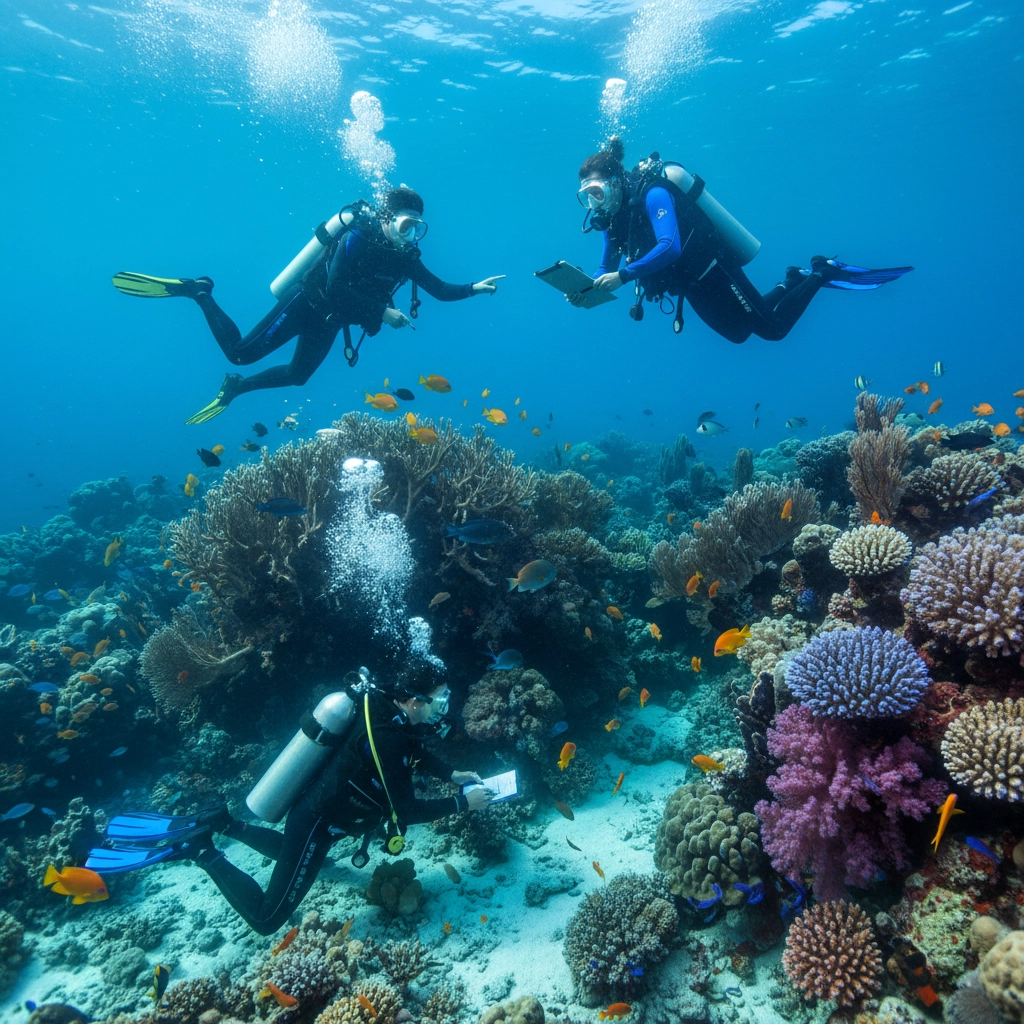
Fish population surveys through programs like Reef Check involve systematic counting and species identification during your dives, providing crucial data on biodiversity and ecosystem health. This work requires more training than some other citizen science activities, but the impact is substantial: your data helps determine which areas need protection and whether existing conservation measures are working.
The methodology is precise: you’ll learn to identify key species, estimate population numbers, and note size distributions within specific survey areas. Advanced divers often appreciate this challenge because it sharpens observation skills and deepens understanding of marine ecosystem dynamics. Group surveys are particularly effective because teams can cover larger areas and verify each other’s identifications.
Training typically takes place over 2-3 days at the beginning of your trip, combining classroom sessions with practice dives. Once certified, you can participate in surveys worldwide, and many divers find themselves planning trips specifically around survey opportunities in different ecosystems.
Collect Water Quality Data
Water quality monitoring dives involve measuring parameters like temperature, visibility, pH levels, and nutrient content at specific dive sites. This data helps scientists track pollution levels, identify contamination sources, and monitor how water conditions affect marine life over time.
Some programs also include microplastics research, where divers collect water samples that researchers later analyze for plastic particle content. This emerging field reveals how microplastic pollution varies by location, season, and depth, providing crucial information for understanding this pervasive environmental threat.
The equipment is typically simple: waterproof data loggers, sample collection bottles, and measurement devices that require minimal training to use effectively. Solo divers can easily integrate water quality monitoring into regular diving routines, while groups can establish comprehensive monitoring networks across multiple sites.
Support Coral Restoration Efforts
Hands-on coral restoration represents one of the most directly impactful forms of citizen science diving. These programs typically involve maintaining transplanted coral fragments, cleaning them of algae, monitoring growth rates, and sometimes helping install new coral nurseries.
The work requires excellent buoyancy control since you’ll be operating in close proximity to living reef systems, making this ideal for intermediate and advanced divers. Many programs also incorporate plastic recycling initiatives, turning collected marine debris into materials for artificial reef structures.
Restoration dives create powerful emotional connections: watching coral fragments grow over multiple visits provides tangible evidence of conservation success. Group travelers often find this work particularly meaningful because collective effort produces visible results within relatively short timeframes.
Get Properly Trained and Certified
Before diving into citizen science, invest in appropriate certifications and training. Most programs require at least Advanced Diver certification with strong buoyancy control, and some mandate specific courses like Reef Check EcoDiver certification.
Training typically includes learning data collection methodologies, species identification, proper documentation techniques, and underwater photography skills for recording findings. Organizations like SSI Blue Oceans and PADI AWARE Foundation offer structured programs that connect you with training opportunities worldwide.
The investment in training pays dividends beyond citizen science participation: these skills enhance all your diving experiences by deepening your understanding of marine ecosystems and improving your underwater observation abilities.
Making It Happen
Getting started is simpler than you might expect. Many dive operators, particularly in marine biodiversity hotspots, have established relationships with research organizations and can immediately involve you in ongoing projects. Java Travel USA maintains partnerships with citizen science-friendly operators across popular diving destinations, making it easy to incorporate these activities into your travel plans.
Whether you’re interested in a week-long research expedition or want to add citizen science components to a broader vacation, we can connect you with appropriate programs that match your interests, skill level, and travel style. Your contributions, combined with data from thousands of other divers worldwide, create the comprehensive datasets that scientists need to implement effective ocean protection measures.
The ocean needs advocates now more than ever, and citizen science diving provides a perfect way to combine your passion for underwater exploration with meaningful conservation action. Your next dive trip could contribute to discoveries that help protect marine ecosystems for generations to come: and we’re here to help make that happen.
Ready to make your next diving adventure count? Contact our diving specialists to explore citizen science opportunities in your dream destinations.
 Java Travel USA
Leave a comment